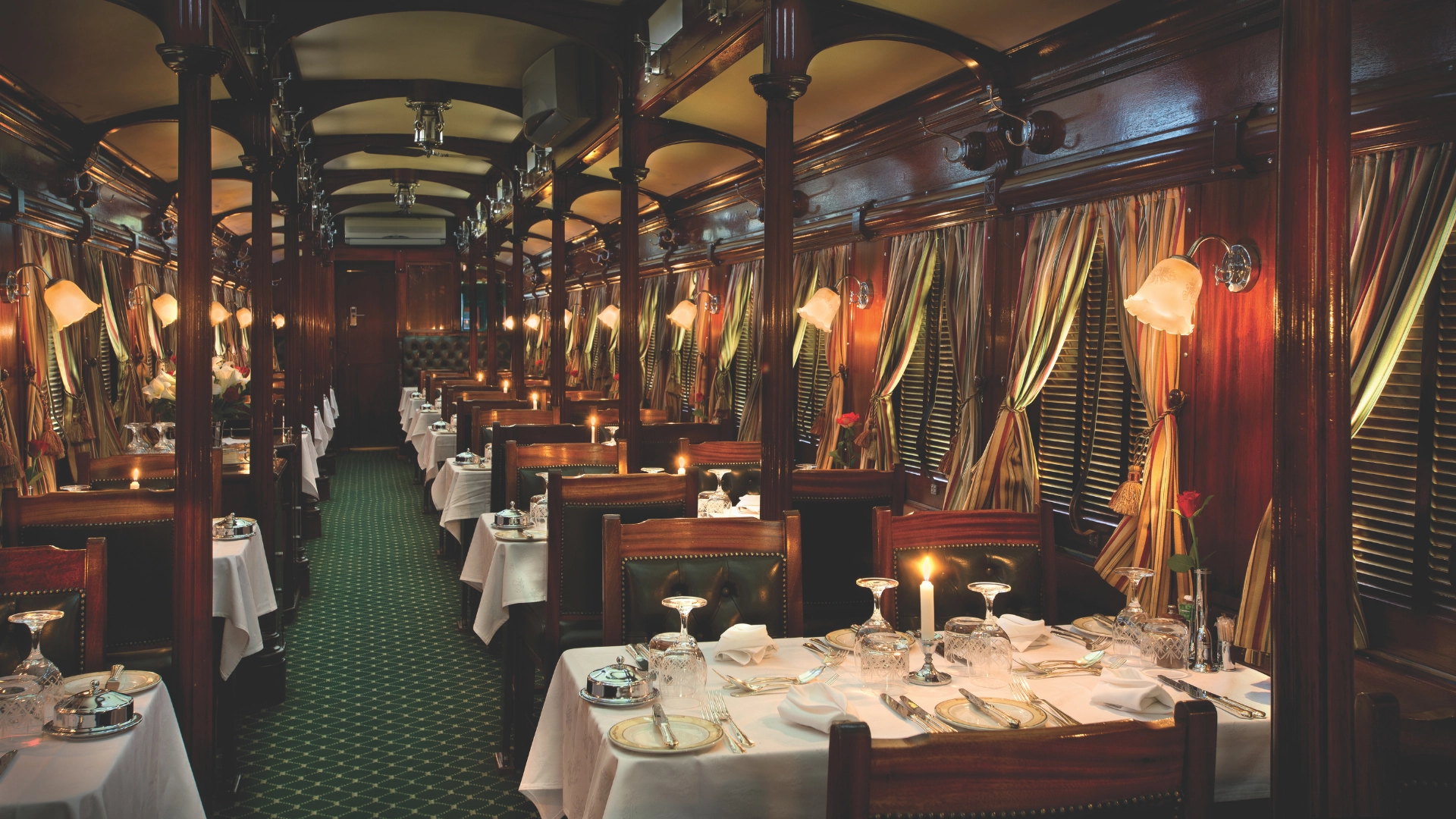
Dinner on the gradient aboard Rovos Rail’s Pride of Africa
On Rovos Rail’s three-night journey from Cape Town to Pretoria, lunch begins with a gong and the first dinner is served as the train climbs towards the Karoo. Between the Cape vineyards and the Highveld, a good table turns out to be an excellent place to read a landscape.
JOURNEY AT A GLANCE
Rovos Rail’s Pride of Africa · Cape Town to Pretoria
ROUTE
Cape Town railway station via the Cape Winelands, Matjiesfontein, the Great Karoo and Kimberley to Rovos Rail Station, Capital Park, Pretoria. Check in at the Rovos Rail Lounge, Paul Sauer Building, 1 Adderley Street. Selected departures run year-round in both directions. Available suite categories vary by departure.
BEST SEASON
March and April for Cape autumn and the latter part of the grape harvest. Picking dates vary by estate and vintage.
DURATION
Three nights and four days, covering around 1,600 kilometres.
STARTING FARE
Approximately £2,410 per person sharing, one way in a Pullman Suite, through 30 September 2027. The published R54,000 fare includes accommodation, meals, most onboard drinks and scheduled guided excursions. From 1 October 2027, the published starting fare is R59,900, approximately £2,680. Sterling equivalents use the 17 November 2026 exchange rate.
A Gong in the Cape
At one o’clock, a gong calls the passengers to lunch. The train is two hours into its three-night journey from Cape Town to Pretoria, and the first of four courses is about to arrive. The tables are laid with white linen and silver. Beyond the glass, the city gives way to rows of vines, their geometry briefly holding as the carriage moves past. In a dining room ashore you might ask for a window table and spend lunch looking at a single good view. Here it changes between mouthfuls.
The morning begins on Adderley Street, where Rovos Rail checks passengers in at the Paul Sauer Building before they board at Cape Town station. A suite gives you a door to close and somewhere to put the jacket you’ll need that evening. The rear observation carriage offers a more immediate temptation. Its open balcony lets the sound of the rails through, and the line you’ve just travelled stays in view long after it has slipped past the dining-car windows. There are booths inside for anyone who would prefer to watch it recede with a glass on the table.
Rohan Vos’s first idea for these carriages was a family caravan that South African Railways might agree to tow. The cost of having it hauled helped turn the hobby into a business. His first commercial train set out in April 1989 with seven carriages and four paying passengers. The Pretoria–Cape Town run followed in 1991. In the search for suitable rolling stock, Vos found three damaged dining cars at a Johannesburg country club, where a scheme to turn them into a restaurant had come to nothing. The Kei, Nile and Modder went back onto the railway.
It is a pleasing route back to usefulness for a carriage designed to feed people in motion. There is one sitting for lunch, with tables for two or four, and enough time to finish a conversation over the last course. Afterwards, the rear balcony offers another way to spend an hour. With three nights ahead and tea at half past four, there is little reason to consult the timetable between the two.
Dinner on the Gradient
Beyond Worcester, the Hex River Valley makes a small correction to the story told by the wine list. The vines around De Doorns are known for table grapes. In season the bunches here are destined for the fruit bowl, while the South African wines poured on board come from a cellar stocked before departure. You can spend the afternoon travelling through vineyards with a glass of Cape wine in hand and still find yourself looking at two quite different kinds of farming.
The railway gains roughly 750 metres between the valley and the country above it. Four tunnels take the line through the mountains, the longest running for 13.5 kilometres. In the tunnel, the window gives back the lit carriage: a table lamp, the rim of a glass, a companion across the cloth. When there is daylight outside, the view returns all at once. The published itinerary puts the first dinner during the climb. The kitchen has four courses to get out while the railway does some of its hardest work.
Dinner is at half past seven, and the train asks gentlemen to wear at least a jacket and tie. The formality belongs to a familiar British dining-room tradition. The wine list takes its bearings from much closer by. Rovos has previously poured Thelema’s Stellenbosch Cabernet Sauvignon, a wine its own notes describe in terms of blackcurrant, cedar and pencil shavings. The stock changes, which gives the bartender a better question than the usual request for a red: what South African bottle would they open tonight? The company trains its bar staff on the local producers whose bottles they carry.
At this hour the wine can tell you more about the Cape than the view does. In autumn, the mountains above the vineyards are already in darkness by dinner, and the high country beyond the tunnels has to wait until morning. Breakfast is served before the scheduled stop at Matjiesfontein. There, on the platform, stands a Victorian station that once made its living from the fact that railway passengers had to interrupt their journey to get something to eat.
The Refreshment Rooms at Matjiesfontein
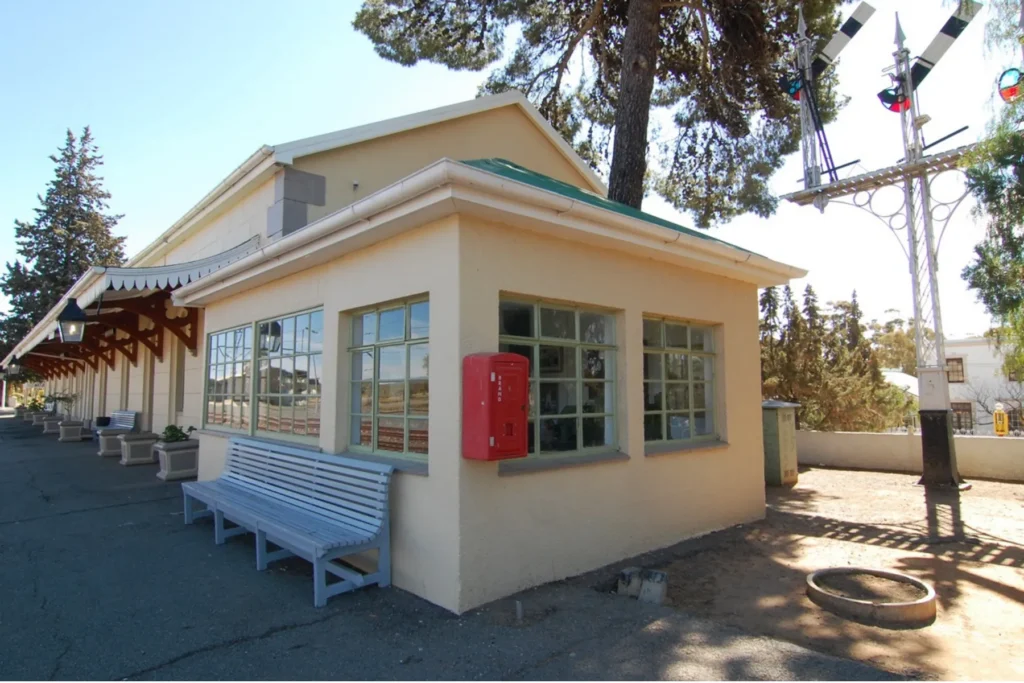
At Matjiesfontein, the timetable allows for a walk while breakfast is still being served. You can leave the dining car and be on a platform where, in the 1880s, getting off was how you got fed. James Douglas Logan, a Scot who had worked on the railways in Britain, took over the catering concession in 1884. He provided two refreshment rooms, one for first-class passengers and another for second. Even during a pause for something to eat, the railway kept its distinctions.
The station had opened in 1878, six years before Logan took over. Its current building dates from 1890. The name reaches further back than either: it refers to a sedge the Khoekhoen used to weave mats for their dwellings. Logan understood the value of what grew and ran beneath this dry ground. He bought a neighbouring farm with four permanent springs and struck a deal with the railway to pipe water to the station. Feeding passengers was one way to make a living here. Supplying water proved another.
Across from the station, the turret of the Lord Milner Hotel is easy to pick out. It belongs to the hotel Logan built in 1899, in the opening stages of the South African War. The building served as a military hospital, and the turret doubled as a lookout and machine-gun post. Inside the station itself, the Marie Rawdon Museum preserves things on a more domestic scale: dresses that belonged to Emma Logan, old dental instruments and an apothecary with rows of glass jars. In a village whose most conspicuous building announces itself with a turret, there is something rather intimate about coming across someone’s clothes.
The walk brings you back to the same platform, where the practicalities of Logan’s business are plain enough. People could cross from train to table in the time the railway gave them. The passengers climbing aboard now can defer lunch until one and eat it at a table moving deeper into the Karoo. The cup of coffee they had time to finish before stepping down, the extra few minutes among the museum’s glass jars: both depend on work the train now carries with it.
The Long Afternoon
Out on the Great Karoo, a low hill can hold its place in the window for minutes while the ground beside the track flickers past. The country is semi-arid, with wiry grasses and low shrubs that make even a modest rise easy to see. On the observation carriage’s open balcony, there is the wind and the clack of the wheels. A few steps indoors, there is a booth with a table broad enough to unfold the route map. On paper, the distance between Matjiesfontein and Kimberley is easy to take in. The afternoon gives it scale.
At half past four, tea arrives in the lounge and observation carriages. Here the little things that make an afternoon easy have been thought through several days in advance. In Pretoria, Rovos Rail’s stores allocate provisions for each journey. The bartenders count the bottles into cages for loading and collect their glasses and garnishes from the kitchen store. Olives and cocktail cherries go aboard alongside the whisky and wine. It takes a certain exactness to make a drink feel like a decision taken on the spur of the moment, somewhere between a siding and the next patch of shade.
Among the wines Rovos has served is Silverthorn’s The Green Man, a Chardonnay Cap Classique from the Robertson Valley. The producer leaves it on its lees for at least two years. Rovos’s tasting notes mention green apple and the smell of baked brioche. It is a bottle with a place attached: Robertson lies east of Worcester, close to the country the train crossed the previous day. The list changes, and a conversation at the bar can send you back to the Cape by way of whichever producer happens to be represented that afternoon.
There is room between tea and dinner to leave the map folded and stay by the window. Close to the line, the small bushes are distinct enough to pick out individually. Farther away they give the ground a grey-green cast, and the slopes beyond them are slow to change. Come morning, at Kimberley, the view will ask you to look down into the earth. For the length of this afternoon, you can look straight out and see how much ground it takes to get there.
The Ground Beneath Kimberley
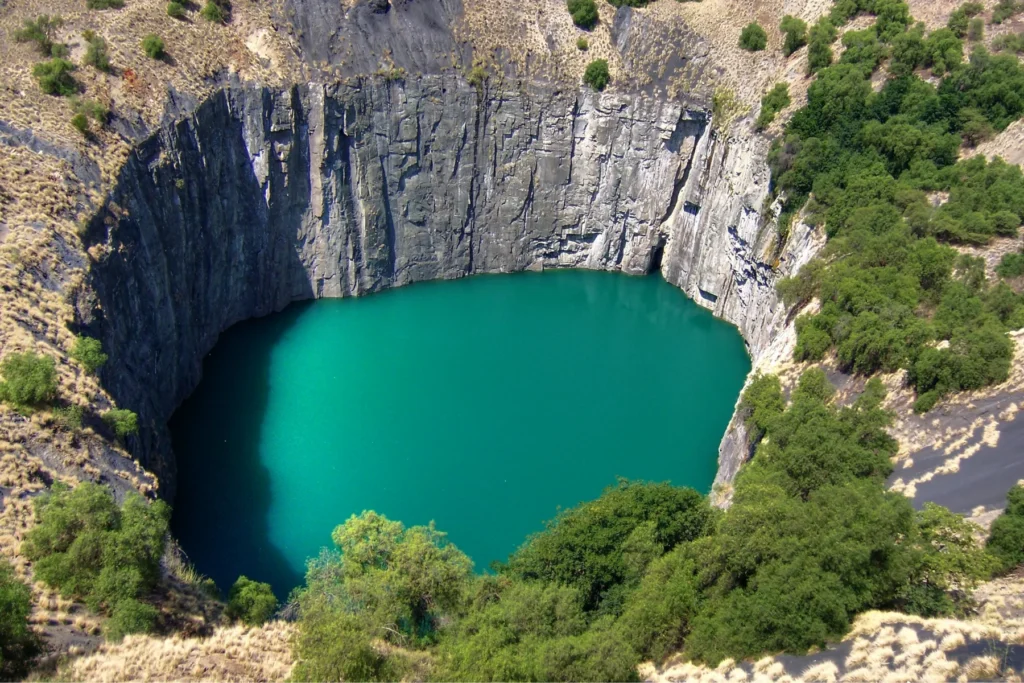
The viewing platform at Kimberley takes you out over the rim of the Big Hole. After a day of looking across the Karoo, the eye has to adjust to looking down. The far wall is more than 450 metres away. It is easier to grasp the width by following the ragged edge round than by trying to take in the whole excavation at once. There was once a low hill here. Mining began in 1871 and continued until 1914, by which time the hill had become a cavity large enough to take up 17 hectares of the town.
Inside the visitor centre, the scale shrinks to the size of a tool or a stone. The museum tells the story through the implements miners used and the diamonds they took out. The word rush conveys something of the speed with which people arrived. The pit gives a better sense of the years they spent digging. In 1885 the railway from the Cape reached Kimberley, making it easier to move people and goods between the coast and the diamond fields. A hundred and forty years later, the mine helps explain why a train from Cape Town takes this particular course across the interior.
That same year, the first closed compounds appeared. As underground mining expanded, companies confined Black migrant workers in guarded quarters, cutting them off from the surrounding town for the duration of their contracts. Mine owners defended the compounds as a way to prevent diamond theft and enforce discipline. Overcrowding, poor diets and inadequate protection from the cold helped make pneumonia a leading killer on the fields. The system was copied at other mining centres. Kimberley exported a way of controlling labour as well as the stones that made its name.
The tour is scheduled for the morning, with lunch back aboard as the train heads towards Klerksdorp and the grasslands of the Highveld. There is time over the meal to trace the line back through De Aar on the route map. Yesterday, at Matjiesfontein, the station showed what a railway could do for a small settlement. Kimberley shows the other side of that relationship. The diamond fields gave the railway a reason to come this far.
Where the Carriages Come Home
On the last morning, breakfast is cooked to order as it has been throughout the journey. A table by the window still earns its keep. The Highveld has broad grasslands, and the view opens out again after the near walls of Kimberley’s excavation. There is lunch to come before Pretoria. By now even that small stretch of time, between breakfast and the moment the cloths are laid again, feels worth keeping free.
At Capital Park, the carriages arrive where much of the work that sent them out began. Rovos took over the former South African Railways depot in 1999. The tracks were overgrown with thistles and the buildings had been vandalised. Today the low red-brick buildings by the platform hold kitchens, laundries and stores, while the sheds accommodate the people who repair and restore the rolling stock. The station also has a museum and a model railway. Passengers who want to see the site can ask Rovos about a tour and arrange for their car to collect them later.
There is a certain satisfaction in seeing where all the linen goes. Behind a table set for two are people who count the cutlery back in, launder the napkins and check the glassware before it goes out again. The same depot is home to carpenters, welders, electricians and painters. Their work ranges from keeping ageing fittings in service to restoring entire coaches. Capital Park puts all of this within a platform’s length of the passenger lounge. After three nights in the carriages, even the prospect of someone tracking down a persistent rattle has a particular interest.
From the platform, there is time for one last look at the carriage you have spent three nights getting to know. You can find your window from the outside now. It is one of several in a line of coaches the yard will take in, clean, provision and send out again. Before long, somebody at Cape Town will put a jacket away for dinner and go looking for the open balcony. By one o’clock, if the railway is running to time, the gong will be calling them to lunch somewhere among the vines.
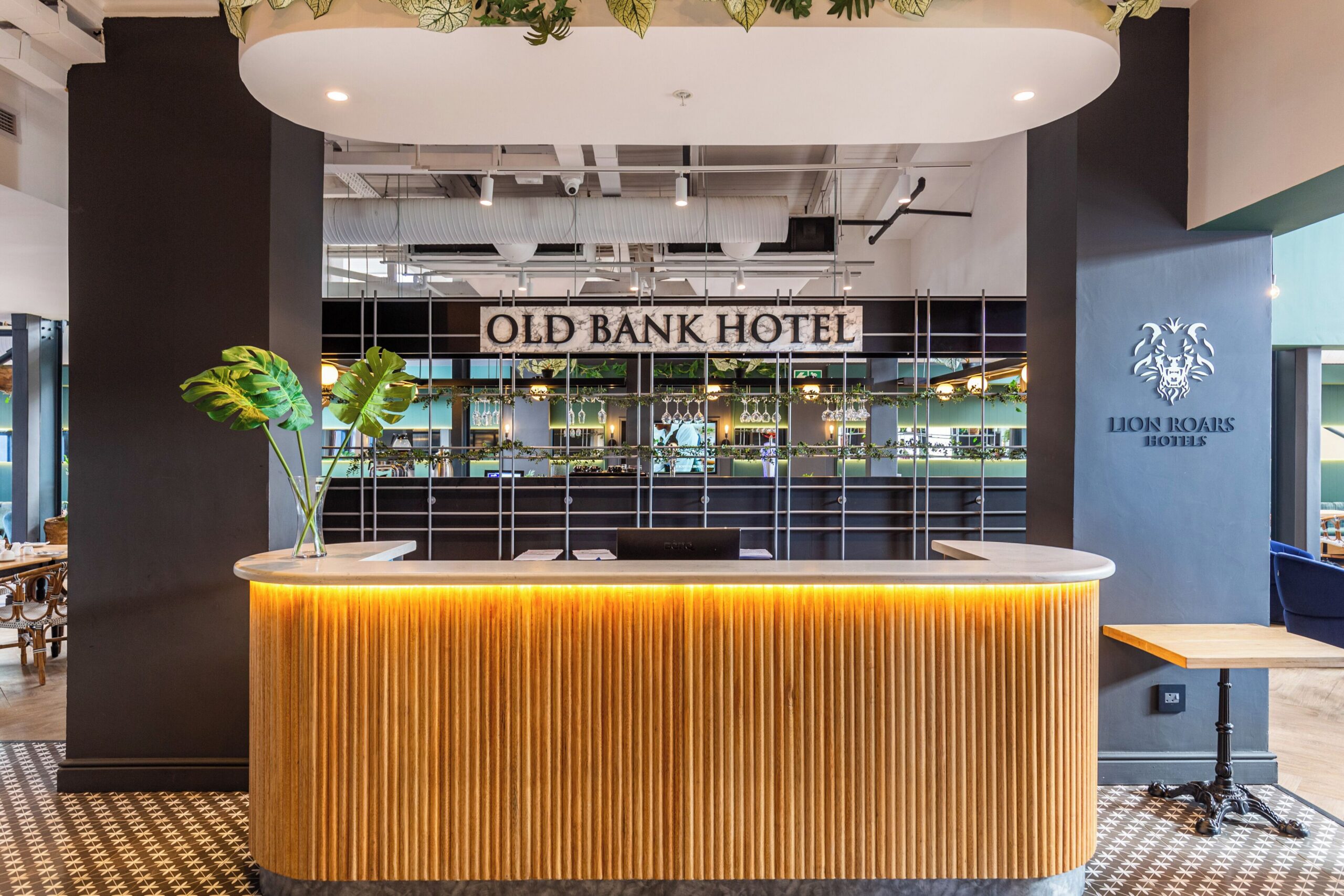
PRE-DEPARTURE STAY
Old Bank Hotel, Cape Town
A former bank on St George’s Mall, this 1902 building pairs ornate Victorian detail with a glass-domed entrance. It’s about six minutes on foot from Cape Town railway station, close enough to linger over breakfast before walking to the Rovos Rail Lounge on Adderley Street.