The Britannic Explorer: A New Way of Seeing Britain
Beyond the familiar bustle of London Victoria, the Britannic Explorer offers a different perspective on the British landscape. With interiors shaped by contemporary craftsmanship, menus from Simon Rogan and journeys through Cornwall, Wales and the Lake District, this remarkable sleeper train makes a persuasive case for travelling without haste.
JOURNEY AT A GLANCE
Britannic Explorer, A Belmond Train
ROUTE
Round-trip from London Victoria, with three principal itineraries: Cornwall, the Lake District and Wales. Selected departures combine Cornwall and Wales or the Lake District and Wales.
BEST SEASON
May, June and September for longer daylight, seasonal produce and varied landscapes. The published 2027 programme covers spring through autumn, with some departures extending into early November.
DURATION
Three nights / four days, or six nights / seven days on combined journeys.
STARTING FARE
From £6,300 per person, based on two sharing a Double Suite, as advertised by specialist rail retailer Luxury-Trains.co.uk. Rates vary by date and availability; Belmond’s displayed fares use different occupancy settings.
INCLUDED
Suite accommodation, daily table d’hôte meals, selected alcoholic and non-alcoholic beverages, onboard entertainment and scheduled excursions. Insurance and gratuities are excluded.
A Different Departure
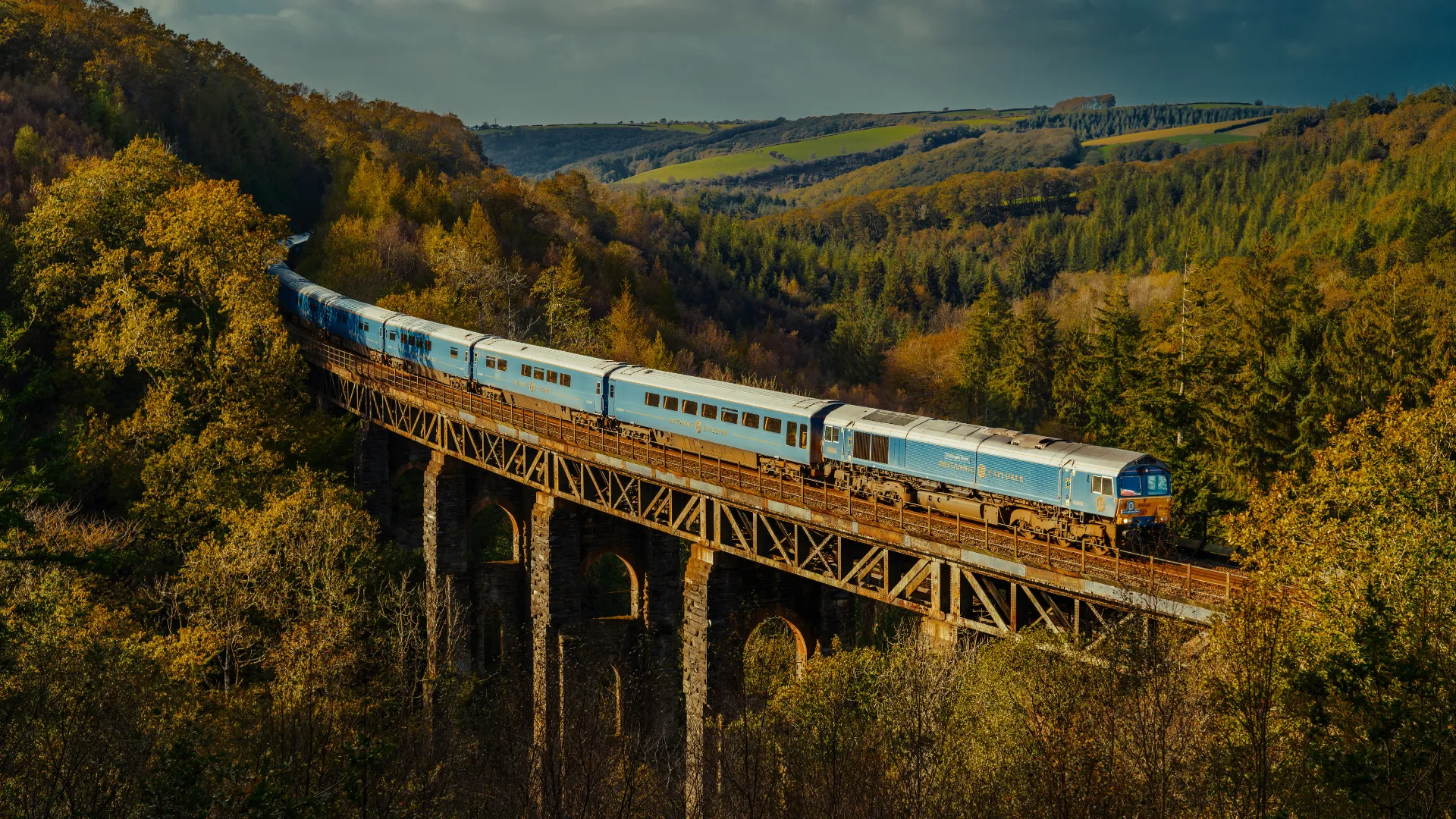
At London Victoria, the distinction between an ordinary railway journey and an exceptional one can be a matter of a few footsteps. Beyond the concourse, where commuters negotiate departure boards and the usual small indignities of travelling across the capital, a train of pale blue carriages offers an altogether different proposition.
The Britannic Explorer begins its journeys here, at a station more accustomed to the daily machinery of metropolitan life than to the leisurely rituals of a grand railway hotel. Guests check in at Belmond’s reception near platform two, exchange their luggage for the attentions of a steward, and prepare to spend the next three nights travelling through some of Britain’s most compelling landscapes.
There is something rather satisfying about the contrast.
The great European sleeping trains have traditionally derived much of their romance from the distances they cover: Paris to Istanbul, Vienna to Venice, one capital yielding to another. The Britannic Explorer is concerned with a smaller geography, though hardly a less interesting one. Its journeys lead towards Cornwall, Wales and the Lake District, returning to London after three nights, or combining regions into a longer six-night itinerary.
The destinations are familiar names. The manner of reaching them is considerably less so.

Britain, after all, is a country whose railways helped shape its understanding of distance. Victorian engineers carried lines across moorland and estuaries, through deep cuttings and beneath cities, making the previously remote accessible to an increasingly mobile public. Railway hotels, grand termini and elaborate dining services followed. Travelling became an experience in its own right, although efficiency eventually displaced much of the ceremony.
The Britannic Explorer belongs to this history without attempting to recreate it exactly. Introduced in 2025, it uses restored Mark III railway carriages, transformed into accommodation for just 36 guests. Rather than presenting a museum-piece version of Edwardian travel, it takes the more interesting approach of placing contemporary British design, food and hospitality within an established railway tradition.
The significance lies partly in the routes themselves.
A journey towards Cornwall brings a change in the quality of light, from inland farmland to the softer, more open horizons of the Atlantic coast. The northern itinerary connects the old industrial landscapes of Yorkshire with the engineering of the Settle–Carlisle railway and the mountains of Cumbria. Wales offers another character entirely, where language, architecture and geography provide a cultural distinction that no national border is required to announce.
Each offers something worth seeing. The train’s achievement is to encourage passengers to consider the country between the celebrated destinations.
On most rail journeys, the window is a diversion. Here, it becomes one of the principal reasons for travelling.
The Country House That Moves
The Britannic Explorer’s interiors were conceived by Albion Nord, the London design studio whose approach combines traditional craftsmanship with a distinctly contemporary understanding of comfort. The result is closer in spirit to a carefully assembled country house than a conventional sleeper train, although one whose dimensions require considerably more ingenuity.
There are 18 suites altogether: 11 doubles, four twins and three Grand Suites. Within this relatively small collection, the designers have sought to create the kind of domestic intimacy that can be difficult to achieve in a railway carriage. Oak finishes, natural textiles, layered patterns and carefully controlled lighting replace the polished theatricality often associated with luxury trains.
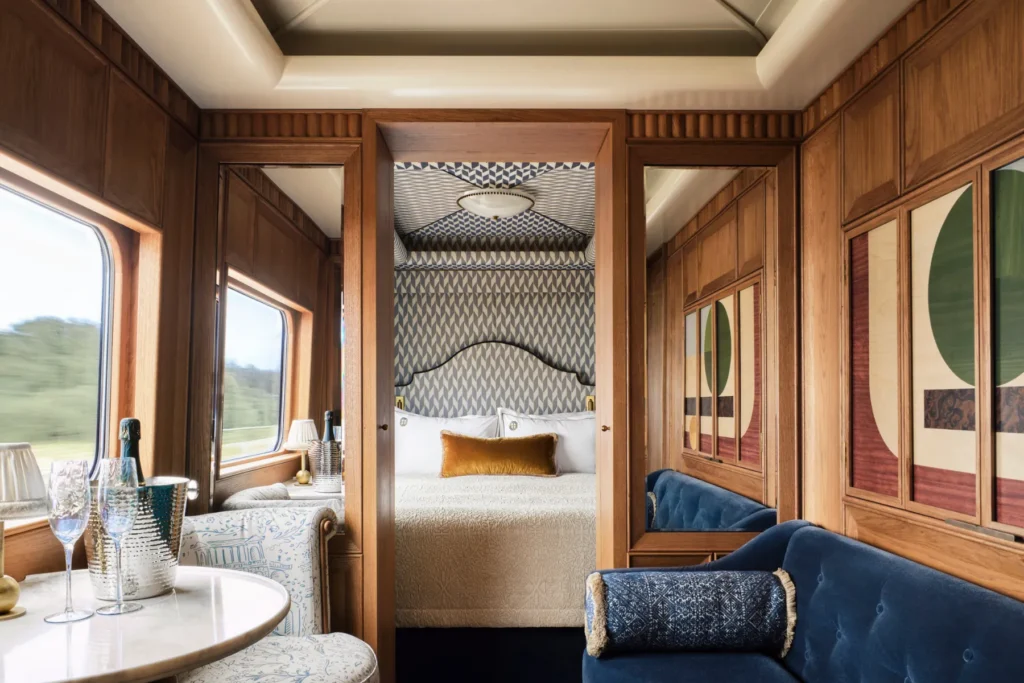
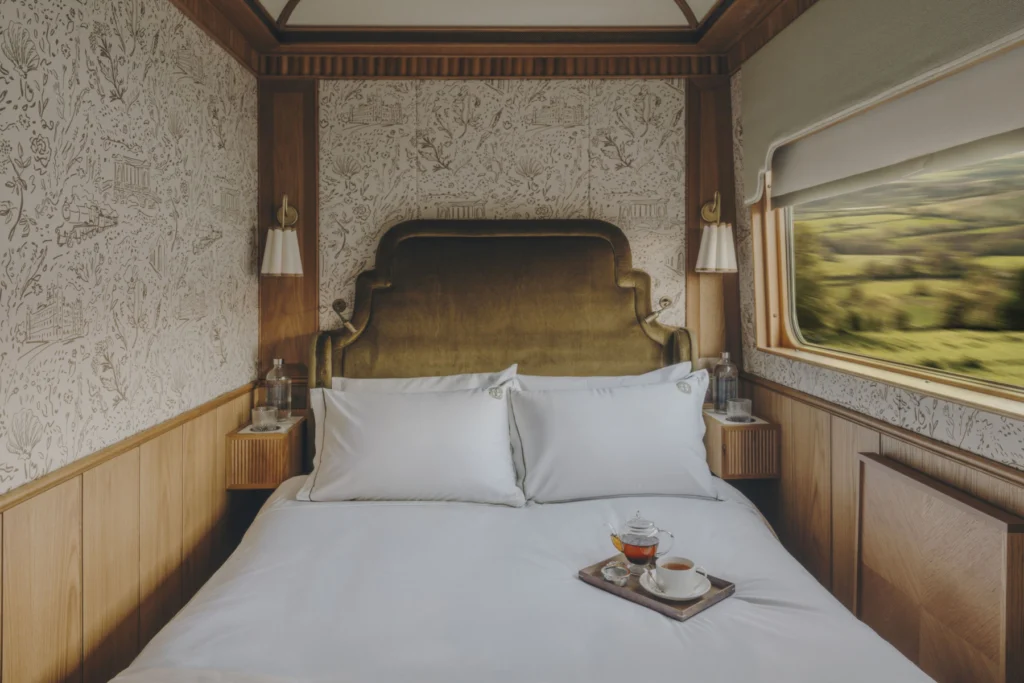
Botanical references provide the interiors with their organising principle. The three Grand Suites take their names and palettes from valerian, juniper and elder, while the restaurant carriages borrow elements from English gardens. The bar, with its apothecary-inspired aesthetic, extends the idea into the social spaces.
These are not arbitrary decorative flourishes. They establish a connection between the train and the natural environments it crosses, allowing the countryside to influence the design even when it is no longer visible beyond the glass.
One particularly expressive contribution comes from artist and designer Luke Edward Hall, who reinterpreted a Rubelli fabric with illustrations inspired by the British landscape. Birds, shells and architectural details appear in a design that rewards the kind of unhurried attention the train itself encourages. It is a clever choice: a textile that seems to have gathered its imagery from the journey outside.
Elsewhere, woven rattan, antique mirrored ceilings and floral upholstery introduce a more familiar country-house vocabulary, though without insisting that every surface should advertise its pedigree. The materials are decorative, certainly, but the overall intention is residential rather than ceremonial.
And this distinction matters.
The finest railway interiors have always understood that grandeur alone is insufficient. A compartment must function as a bedroom, a retreat and, occasionally, a place to contemplate the peculiar intimacy of sleeping while the world continues moving outside.
There are practical constraints, too. A railway carriage cannot offer the proportions of a Georgian drawing room, however persuasive the design. Space remains finite, storage requires consideration and the rhythm of the tracks is never entirely absent. Successful design must accommodate these realities rather than conceal them beneath increasingly extravagant furnishings.
The Britannic Explorer’s small scale contributes to its appeal. With accommodation limited to 36 passengers, its shared spaces have the potential for a more personal social atmosphere than those of a large hotel. The observation car provides somewhere to settle with a drink, while the restaurant carriages offer an elegant setting for the evening’s principal ritual.
Yet perhaps the most interesting aspect of the design is the relationship between stillness and movement.
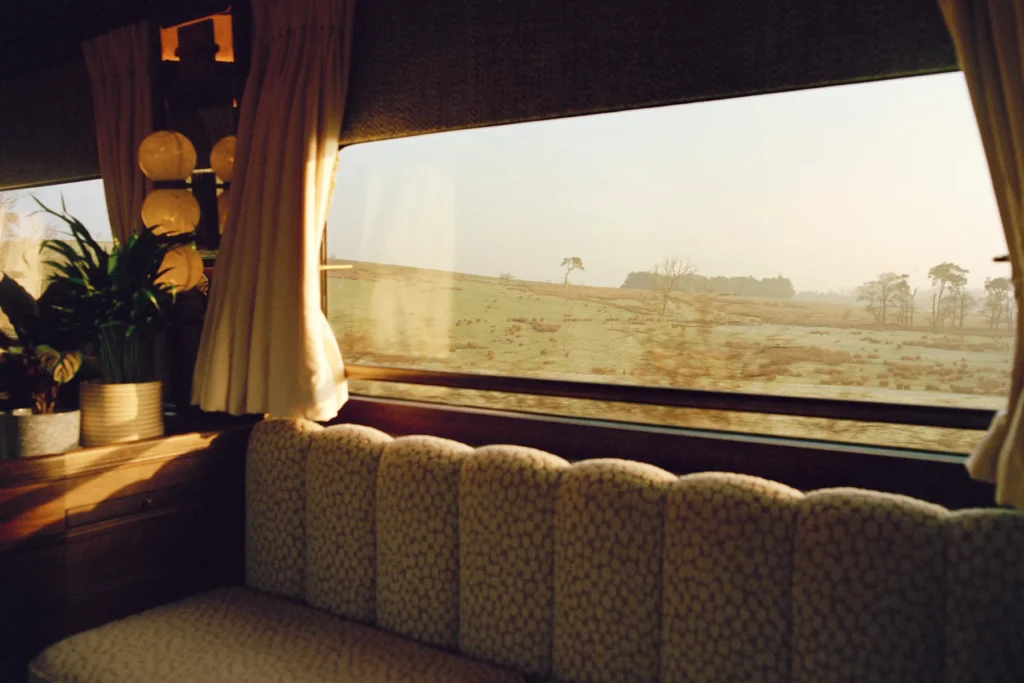
A bedroom furnished in muted botanical colours may feel reassuringly settled, but beyond its window the landscape is continually changing. Woodland gives way to pasture; stone buildings appear and disappear; the light alters as the train follows the contours of the land.
It is a contrast no conventional country house can reproduce.
The rooms remain the same. The view never does.
The Landscape on the Menu
There is a particular pleasure in eating something that belongs to the place through which one is travelling. A piece of fish from the nearby coast, a vegetable grown in the soil of a neighbouring valley, a cheese whose character owes something to the pastures outside the window. On the Britannic Explorer, this relationship between food and geography forms the foundation of the dining experience.
The menus are curated by Simon Rogan MBE, the chef behind L’Enclume in Cartmel, Cumbria, whose cooking has become closely associated with the possibilities of British seasonal produce. His approach is rooted in the conviction that ingredients should dictate the menu, rather than the other way around. At Our Farm in the Cartmel Valley, crops are grown specifically for his restaurants, making the relationship between field and kitchen unusually direct.
A railway dining carriage presents an intriguing extension of that philosophy. Here, the landscape changes while the kitchen remains in motion.
The train’s two restaurant cars, Malva and Samphire, take their names from plants and draw their visual character from the British garden. Botanical textiles, limed oak joinery, woven finishes and mirrored ceilings resembling garden trellises establish an atmosphere somewhere between an elegant conservatory and a particularly well-appointed dining room.
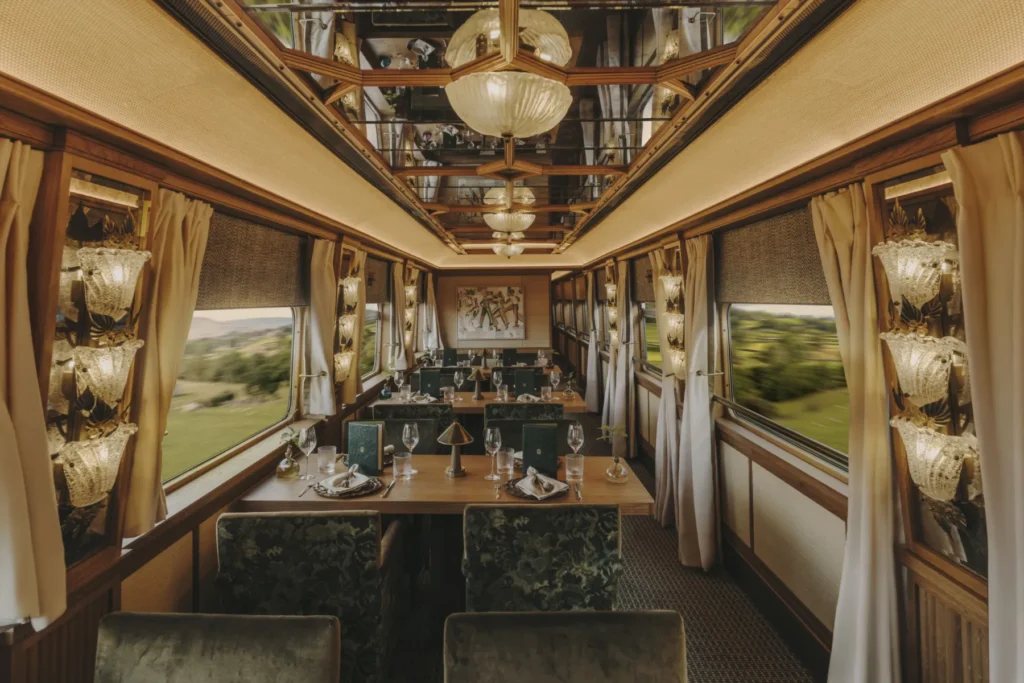
The menus follow the regions. Cornish seafood, Cumbrian produce and Welsh lamb appear within a culinary programme that changes according to season and itinerary. More unusual preparations have included Lincolnshire smoked eel on toasted rye and a savoury porridge of wild mushrooms and seasonal brassicas: ingredients that speak of contemporary British cooking without abandoning its agricultural origins.
Rogan provides the culinary direction, while executive head chef Sven-Hanson Britt leads the kitchen team responsible for translating that philosophy into daily service. It is an important distinction. Cooking at this level aboard a moving train demands more than an accomplished menu; timing, space and consistency become part of the craft.
The experience also extends beyond the carriages. Selected itineraries incorporate private dining ashore, including a seasonal lunch at Our Farm and a dinner at the Waterside Inn in Bray, depending on the journey. Such occasions introduce the producers and places behind the food rather than treating regional ingredients as decorative references.

There is, inevitably, an element of theatre to railway dining. Glassware moves almost imperceptibly with the carriage; a passing town briefly illuminates the window; conversation is interrupted by the appearance of another course. Yet the more interesting ambition here is not spectacle.
It is to give British ingredients a geographical context.
On the Britannic Explorer, dinner is intended to offer something more than a pleasant conclusion to the day. It becomes another means of understanding the country through which the train is passing.
Three Ways of Seeing Britain
Britain’s landscapes change with remarkable speed. A morning of enclosed fields and limestone villages can give way to open moorland by lunchtime; elsewhere, a railway line emerges from wooded valleys into the broad, exposed light of the sea.
The Britannic Explorer’s three principal itineraries make use of this geographical variety, although each offers a rather different interpretation of the country.
Cornwall: the Atlantic imagination
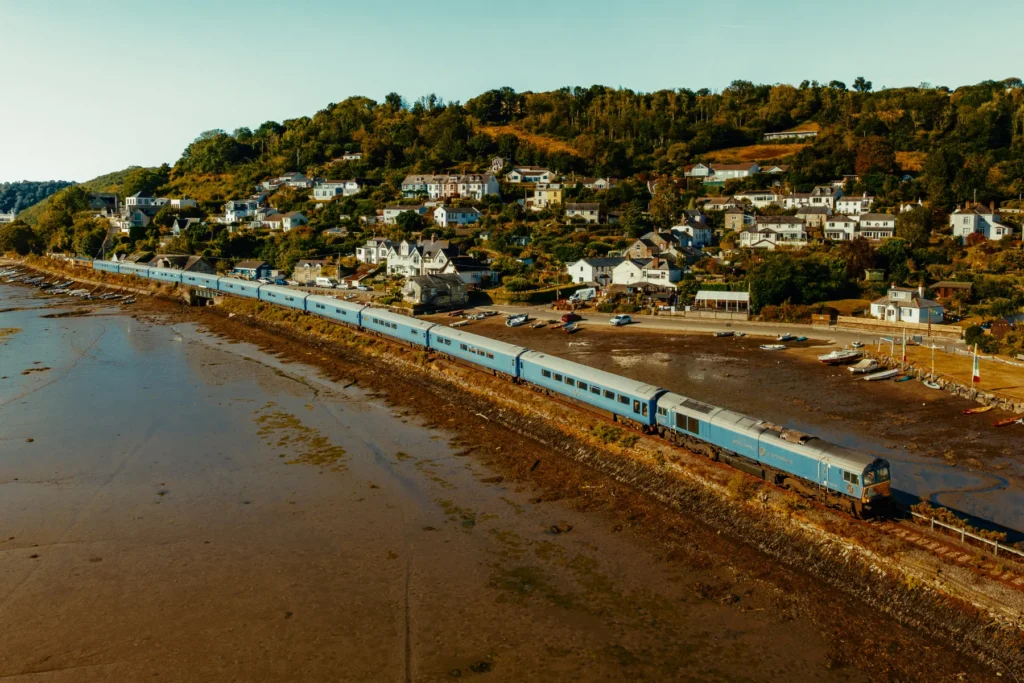
The Cornish journey travels west through Somerset towards St Erth, gateway to the coast near St Ives. Here, the landscape has long shaped a distinctive culture of fishing, art and maritime independence. The railway offers an unusually intimate perspective on its coves, estuaries and settlements.
The region’s appeal is not simply picturesque. Cornwall has a working history, from tin mining to fishing, that gives substance to the harbours and stone villages celebrated in holiday photographs.
The Lake District: a railway through the uplands
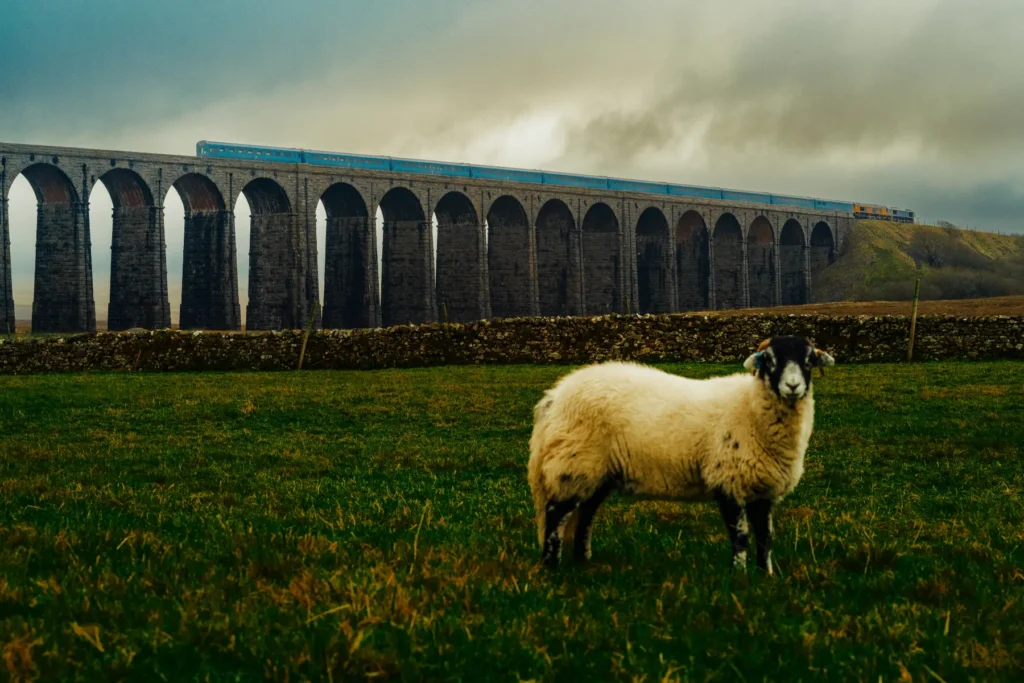
The northern journey draws on some of England’s most evocative railway infrastructure, including the Keighley & Worth Valley Railway and the Settle–Carlisle line.
At Ribblehead, the great Victorian viaduct carries the railway across a broad upland valley beneath the Yorkshire Three Peaks. Its 24 arches remain a formidable example of nineteenth-century engineering, built at considerable human cost.
Beyond the railway lies the Lake District, where steep fells, enclosed valleys and stretches of water have influenced generations of writers and painters.
Wales: another sense of place
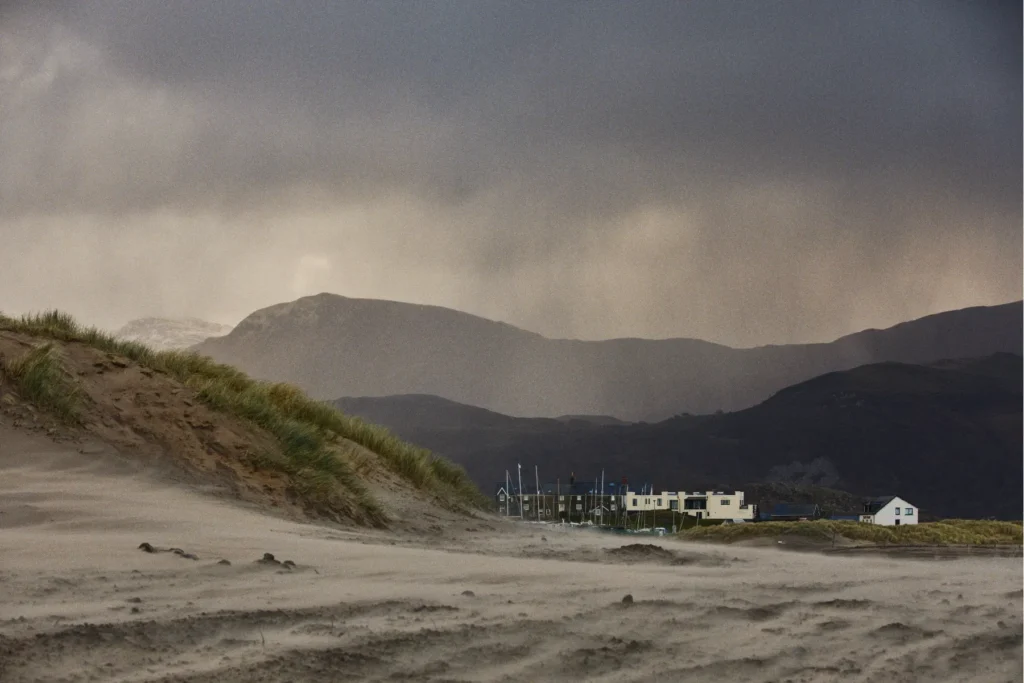
The Welsh itinerary combines the softer countryside of western England with the more dramatic terrain of Eryri and the Pembrokeshire coast.
This is a landscape with its own language, traditions and deeply rooted cultural identity. Slate mountains, old market towns, wooded valleys and exposed coastal settlements are not simply variations on an English theme.
For visitors accustomed to thinking of Britain as a single familiar destination, Wales offers an essential correction.
The itineraries are not merely continuous scenic railway rides. They combine travelling with organised excursions, allowing guests to experience places beyond the stations and tracks. Routes and activities can vary according to operating conditions and departure dates.
This is perhaps the Britannic Explorer’s most persuasive quality: the opportunity to rediscover landscapes that are frequently overlooked precisely because they seem so familiar.
The train cannot claim to reveal an undiscovered Britain. Very little of the country remains undiscovered, and the railway itself has been carrying travellers through these landscapes for more than a century.
What it can offer is a change in attention.
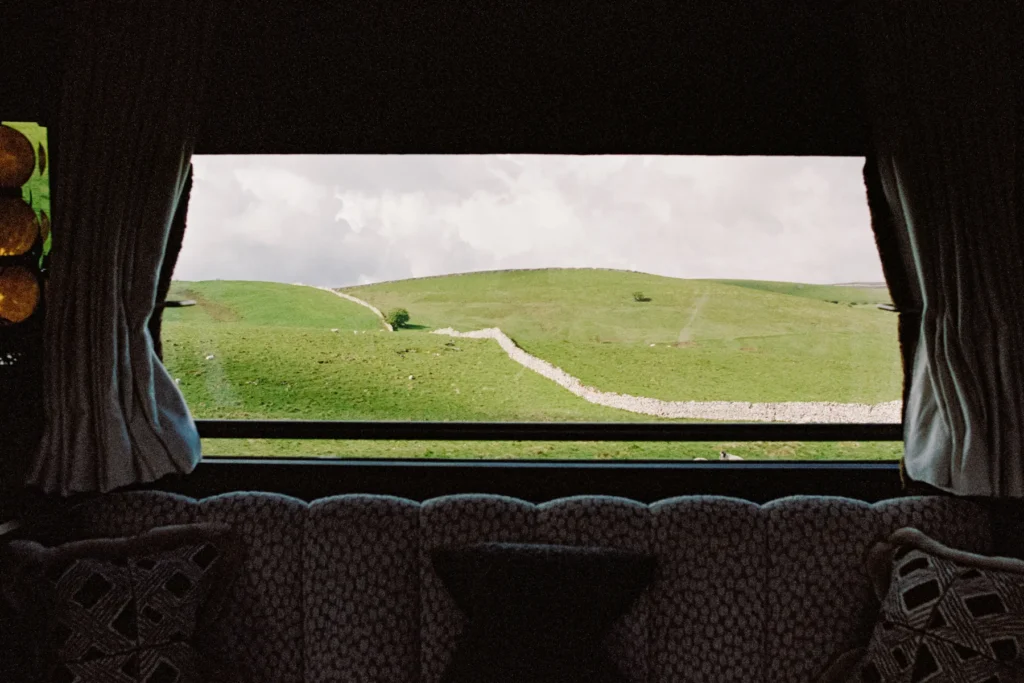
From the quiet of a dining carriage or a private suite, Britain becomes a succession of changing forms: hedgerows, stone walls, tidal creeks, chimney pots and distant hills. The details are ordinary enough. Given the time to observe them, they become rather more interesting.
The Hours Between Destinations
There is a moment on a railway journey when the business of travelling gives way to the simple pleasure of being somewhere else. The luggage has been unpacked, the timetable temporarily forgotten, and the landscape outside begins to command more attention than the destination ahead.
On the Britannic Explorer, that moment is not incidental. It is fundamental to the experience.
The observation car forms the social heart of the train. Designed by Albion Nord with the atmosphere of a sophisticated drawing room, it combines richly patterned upholstery, mirrored surfaces and botanical references with a bar whose inspiration comes partly from the traditional apothecary. The effect is playful without sacrificing a sense of occasion.
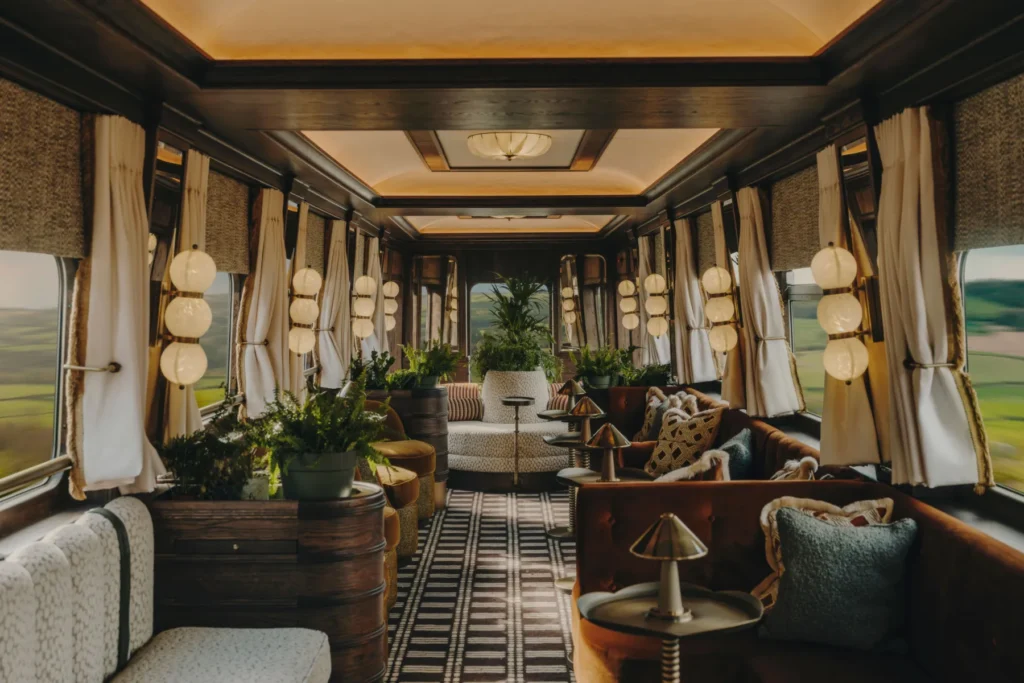
Here, passengers can exchange the privacy of their suites for a more convivial kind of travelling. A cocktail before dinner, a conversation prolonged by the absence of any immediate obligation, perhaps a whisky while the countryside settles into the muted colours of evening. The pleasures are deliberately modest in their demands on one’s attention, however elaborate their surroundings.
Elsewhere, the train makes a more contemporary concession to the art of doing very little.
Its Wildsmith Wellbeing Suite brings a botanical approach to treatments aboard the railway. Developed in partnership with the British skincare company, the programme draws on natural ingredients, therapeutic touch and the relationship between bodily rhythms and the surrounding environment. Among its treatments is a Circadian Rhythm Reset, conceived around the patterns of rest and renewal associated with the natural world.
The idea is particularly well suited to a sleeper train. The railway has always imposed its own rhythm upon the body: the gentle movement of a carriage, the occasional interruption of a junction, the curious sense of waking in a place one has not consciously travelled towards.
Yet the Britannic Explorer is not designed solely for contemplation.
Its itineraries include organised experiences ashore, from coastal excursions and private cultural visits to activities involving the natural environment. Depending on the route, guests might find themselves exploring Cornwall by boat, participating in a guided outdoor experience in Wales or discovering the food traditions of northern England.
Such arrangements provide the journeys with structure, although they also reveal something about this particular interpretation of slow travel.
This is not independent wandering in the conventional sense. The railway, meals, excursions and much of the day’s activity are carefully orchestrated. There is little of the improvisation that can make an ordinary railway holiday so memorable: the unexpected station café, a missed connection, an afternoon spent somewhere simply because it looked interesting through the window.
For some travellers, that absence will be part of the appeal. Others may find themselves longing for a little less choreography.
Still, the train offers something increasingly scarce in contemporary travel: the opportunity to occupy time without constantly attempting to improve its productivity.
The hours between destinations are not empty.
They are, in many respects, the point.
The Art of Returning
The final morning of a railway journey has a character quite unlike its beginning.
The anticipation of departure has disappeared. Familiar objects are returned to their cases, breakfast becomes a quieter affair, and the countryside beyond the window gradually begins to resemble the geography of everyday life.
As the Britannic Explorer approaches London Victoria, the journey’s central proposition comes into focus. The train has not carried its passengers to some distant, inaccessible corner of the world. Instead, it has offered a different way of considering a country whose landscapes, traditions and railway lines have been familiar for generations.
This is a subtle distinction, but an important one.
Britain’s railway heritage is often presented through nostalgia. Steam locomotives, polished brass, dining-car silver and the romance of grand departures can encourage the impression that the finest days of railway travel belong safely in the past.
The Britannic Explorer makes a different argument. Its restored carriages draw upon that history, but the experience aboard is unmistakably contemporary. The design belongs to the present, the culinary philosophy reflects modern British agriculture, and the emphasis on wellbeing would have been largely foreign to the great railway hotels of the Edwardian age.
There is also the question of value.
With three-night journeys costing several thousand pounds per person, this is emphatically not a democratic revival of British rail travel. The price places the Britannic Explorer among the country’s most exclusive hospitality experiences, comparable with a stay in an exceptional hotel accompanied by private dining and carefully arranged excursions.
Whether it represents good value depends less on distance covered than on what a traveller expects from the journey.
Those seeking the most efficient means of reaching Cornwall, Wales or the Lake District will find the proposition faintly absurd. Britain’s regular railway network can accomplish the essential task for a fraction of the cost, often leaving more time to explore independently.
But efficiency is scarcely the purpose.
The Britannic Explorer is better understood as a travelling hotel whose principal attraction is its relationship with the landscape. Its rooms, restaurants and shared spaces are designed around the experience of movement; its meals refer to the places beyond the carriage; and its itinerary allows the journey itself to occupy the centre of attention.
There are certainly more spontaneous ways to discover Britain. There are cheaper ones, too. Yet the train’s particular achievement is to make observation feel like an activity worth protecting.
Outside, the familiar signs of London begin to gather. Suburban gardens replace open fields. Brick terraces, signal gantries and the backs of houses mark the railway’s return to the capital. The speed may diminish as the train approaches the platforms, while the ordinary routines of the station prepare to resume.
And perhaps that is the most persuasive argument for travelling this way.
Not that Britain looks entirely different from the window of the Britannic Explorer, but that, for a few days, one has been given the time to look at it properly.
Pre-departure stay
The Goring
Opened in 1910 and still family-owned, The Goring offers Edwardian elegance, immaculate service and a secluded garden behind its discreet Belgravia façade. Just minutes from Victoria station, it is a fitting introduction to the measured pleasures of Britain’s grand railway tradition.
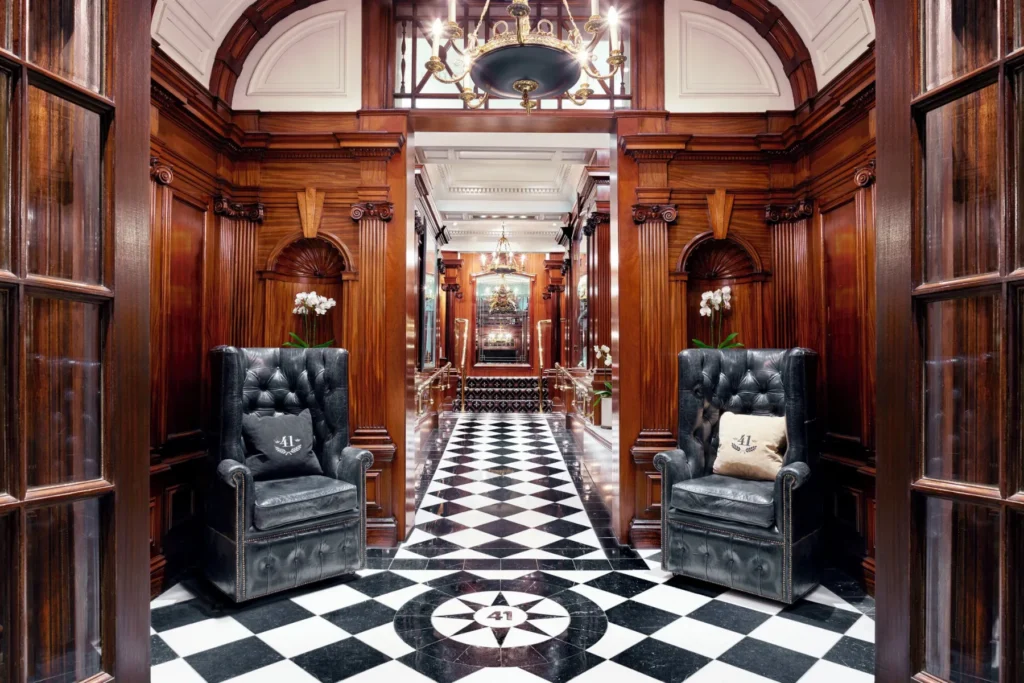
Hotel 41
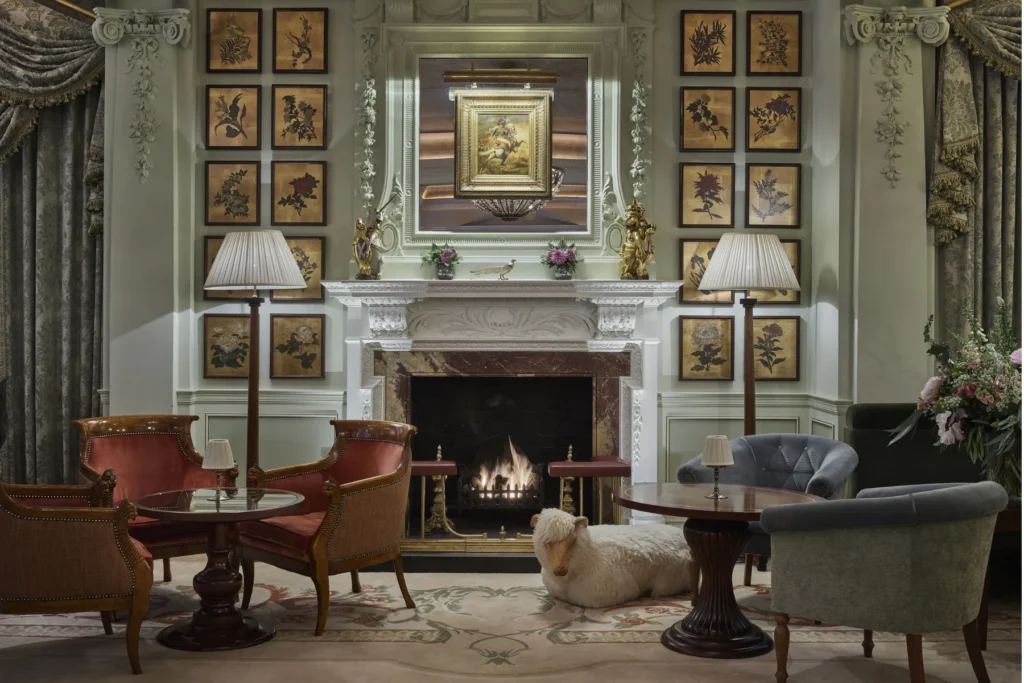
Occupying a former ballroom above the historic Rubens at the Palace, Hotel 41 has the quiet confidence of a private members’ club. Monochrome interiors, attentive hospitality and an intimate atmosphere provide a particularly civilised overnight stop before boarding at Victoria.