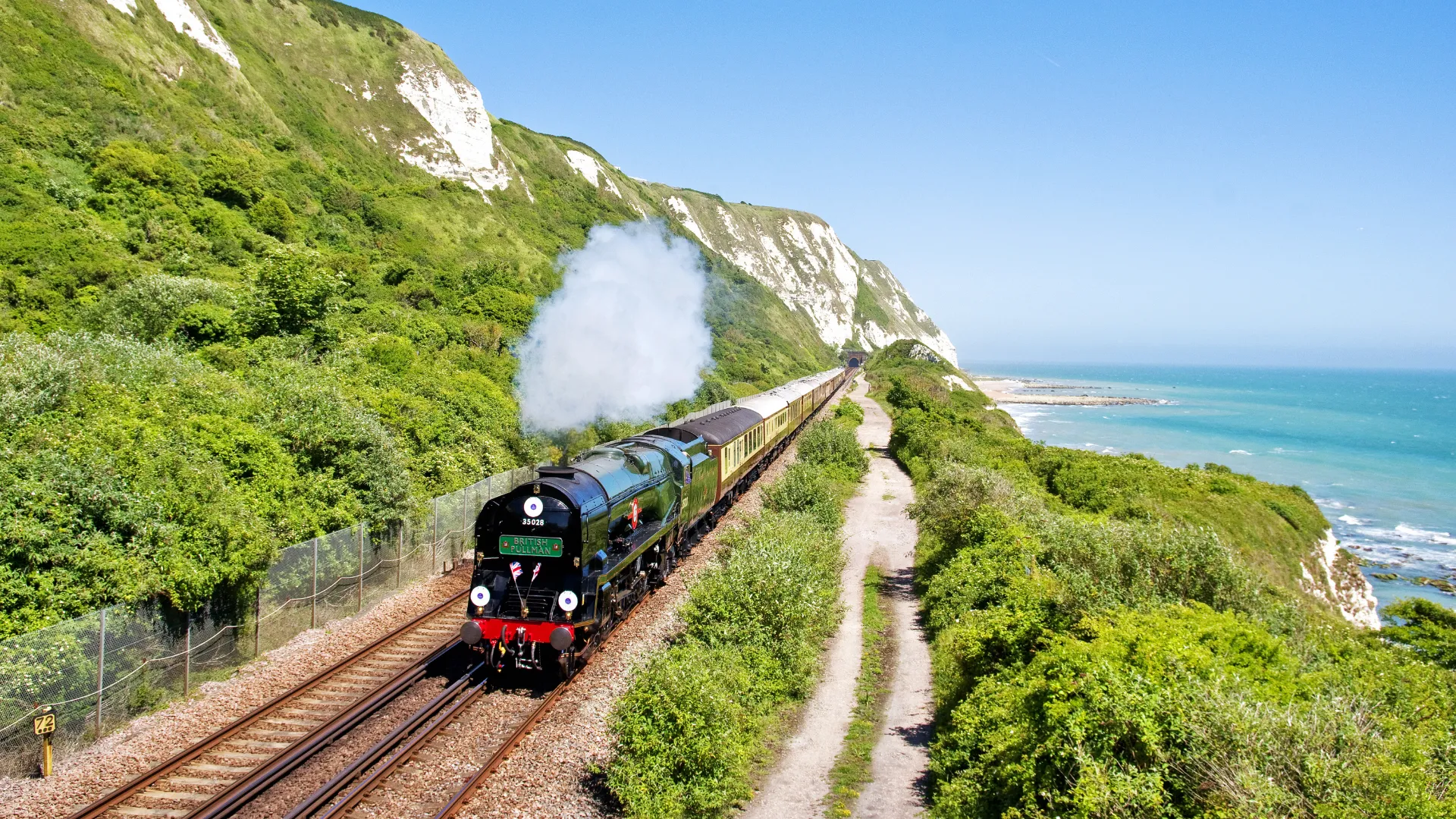
British Pullman: The English Art of Taking One’s Time
Behind the bustle of London Victoria, the British Pullman offers a more civilised interpretation of the railway journey. Its historic Art Deco carriages, carefully orchestrated dining and unhurried passages through the English countryside make a persuasive case for travelling not to arrive somewhere, but simply to enjoy the going.
JOURNEY AT A GLANCE
British Pullman, A Belmond Train
ROUTE
Round-trip excursions from London Victoria, including Kent countryside circuits and selected destinations such as Bath, Oxford and York. Seasonal departures include Christmas dining and themed experiences.
BEST SEASON
May–June for spring and early-summer landscapes; September–October for softer autumn light. November–December for festive departures.
DURATION
Approximately 5 hours 15 minutes for the Golden Age of Travel and Sunday Lunch circuits; longer for selected destination excursions.
STARTING FARE
From £485 per person on selected journeys, including the train excursion and onboard dining. The Golden Age of Travel may be priced higher. Fares vary by date, itinerary and table selection.
The Art of Leaving London
At London Victoria, the difference is apparent before anyone has boarded.
Beyond the station’s familiar procession of commuters, rolling luggage and hurried announcements stands a train that seems almost wilfully indifferent to the demands of modern travel. Its carriages wear the rich umber and cream livery of an earlier railway age, their polished sides catching the light beneath the great station roof. The proportions are different from those of the ordinary trains nearby. There is a deliberate elegance to the windows, the lettering and the restrained gleam of brass.
This is the British Pullman, Belmond’s collection of restored historic carriages, assembled for a form of travel in which the journey is not merely the interval between two places. It is the occasion itself.
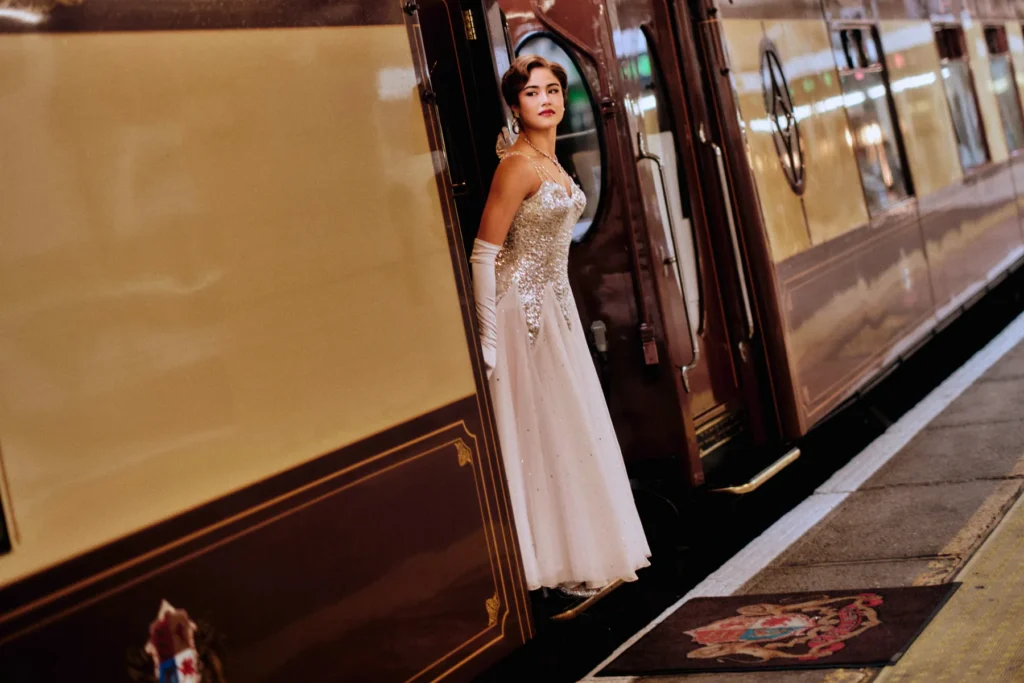
The setting is wonderfully appropriate. Victoria has long been associated with journeys to the south coast and the Channel ports, from which generations of British travellers departed for the Continent. In the heyday of the boat trains, leaving London could involve rather more ceremony than scanning a ticket and finding an available seat. The Pullman tradition belonged to that world: attentive service, well-appointed interiors and dining arrangements intended to make railway travel a pleasure rather than an inconvenience.
Today, the British Pullman departs principally from Victoria on a changing programme of excursions. Some journeys venture towards Bath, Oxford or the seaside; others make a leisurely circuit through Kent, returning to London in the afternoon. The latter is perhaps the purest expression of the experience. There is no urgent destination, no museum to reach before closing time, no hotel waiting at the other end.
Instead, there is lunch.
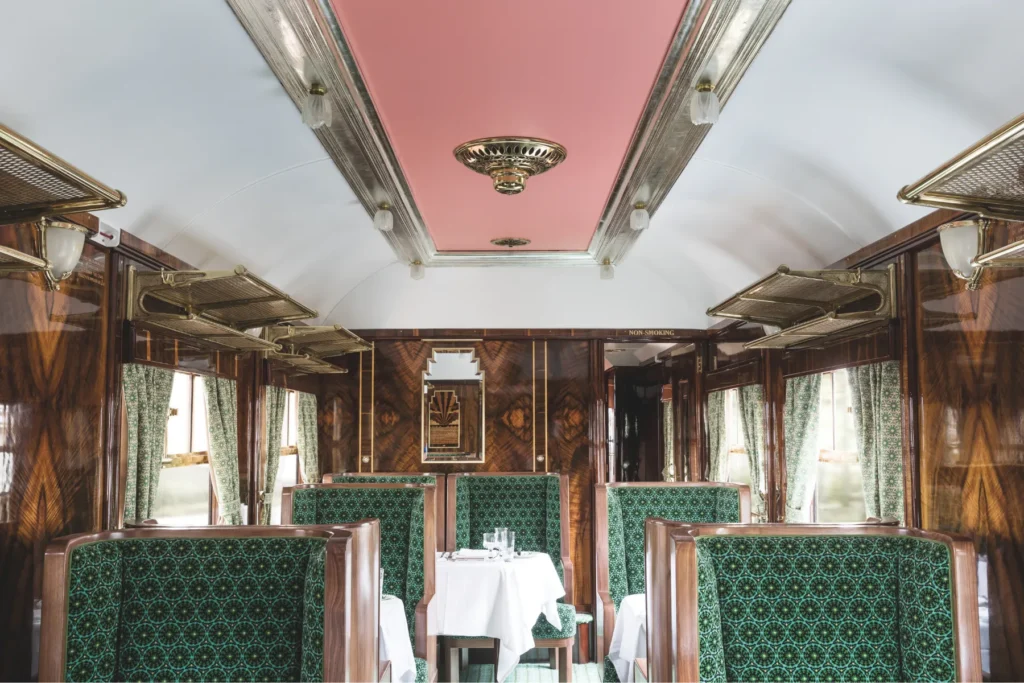
The transition begins at the carriage doorway. The city, with its noise and practical concerns, remains only a few feet away, yet the atmosphere changes almost immediately. Beyond the threshold are upholstered armchairs, richly worked timber and tables prepared for a meal of several courses. A corridor becomes a passage between centuries.
Once seated, the scale of the interior encourages a different kind of attention. The table is properly laid. Glassware catches the daylight. A small lamp occupies its appointed place, while the window offers a framed view of platforms and railway architecture.
Then the train moves.
Victoria’s platforms give way to the brick terraces, railway cuttings and back gardens of south London. Familiar scenery passes at a pace that seems entirely reasonable. Even the industrial edges of the city acquire a certain interest when observed from an armchair beside a white-clothed table.
The remarkable thing is not that the British Pullman makes England look grander than it is. It is that, for a few hours, it makes looking at England feel sufficient.
The Carriages That Time Kept
The British Pullman’s interiors are not a single designer’s interpretation of the 1920s. They are more interesting than that.
Its restored carriages were built in different years, served different purposes and accumulated histories that do not always sit neatly within the mythology of glamorous railway travel. Some carried celebrated passengers. Others survived wartime damage or spent years performing the comparatively prosaic business of transporting people around Britain.
Their survival is part of the attraction.
Consider Audrey, built in 1932 for the Brighton Belle. Its polished woodwork and period detailing belong to an age when the dining carriage was an important expression of railway prestige. The carriage suffered damage during the Second World War and subsequently returned to service, a reminder that these interiors were designed for working railways, not simply preservation.
Ione, constructed in 1928, offers another chapter of that history. Its intimate seating arrangements, decorative timber and carefully restored fittings reflect the considerable craftsmanship once invested in a railway dining car.
There is something particularly appealing about the individual names. Audrey, Vera, Gwen, Ibis, Ione and Cygnus sound less like items of rolling stock than members of an eccentric country-house gathering. Yet the names also help preserve each carriage’s identity. These are not interchangeable rooms decorated to a corporate standard.
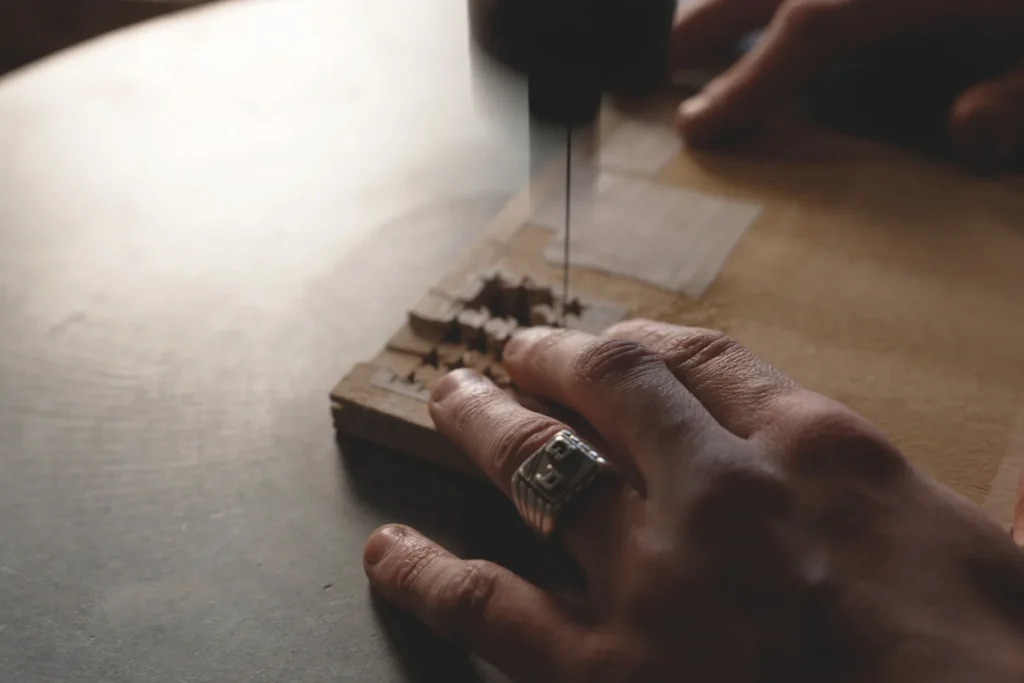
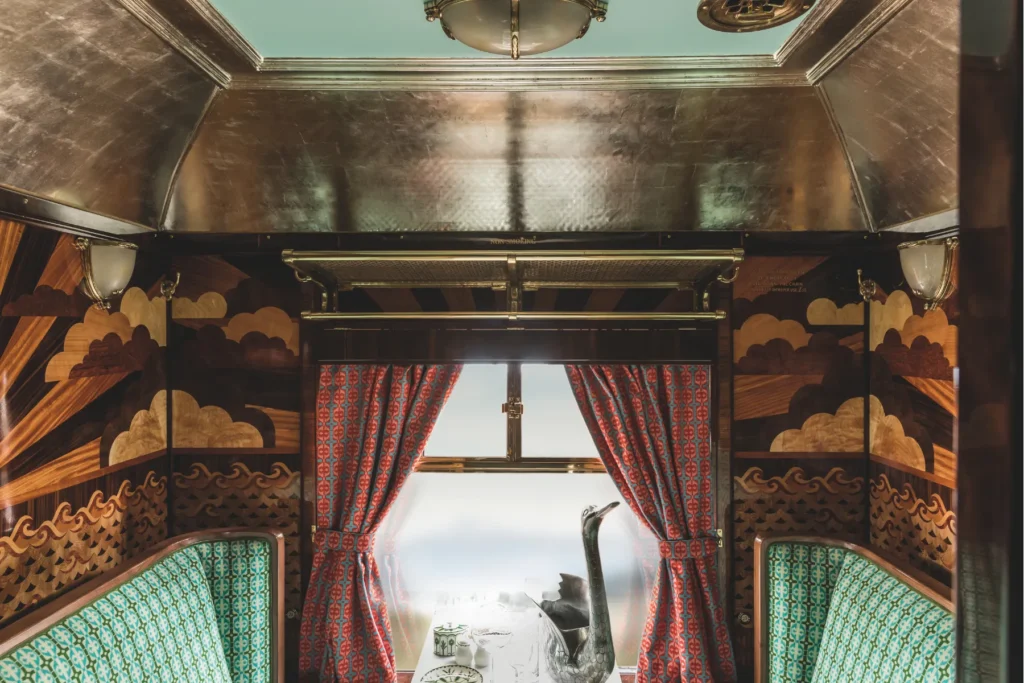
The materials reward close attention: marquetry that reveals itself gradually, patterned upholstery selected to complement the timber, metal luggage racks polished rather than disguised, and lighting sufficiently gentle to flatter both the room and its occupants.
Not every carriage is an untouched historical interior, however.
In 2021, filmmaker Wes Anderson reimagined Cygnus, introducing a distinctive composition of emerald green, decorative geometry and cinematic symmetry. The design feels unmistakably contemporary in its authorship while remaining sympathetic to the architectural language of the original train.
More recently, Baz Luhrmann and Catherine Martin created Celia, an elaborately theatrical private carriage housed within a vehicle dating from 1932. With its cocktail bar, lounge and dining space for up to twelve guests, it represents a different approach: heritage as the starting point for invention rather than an absolute rule.
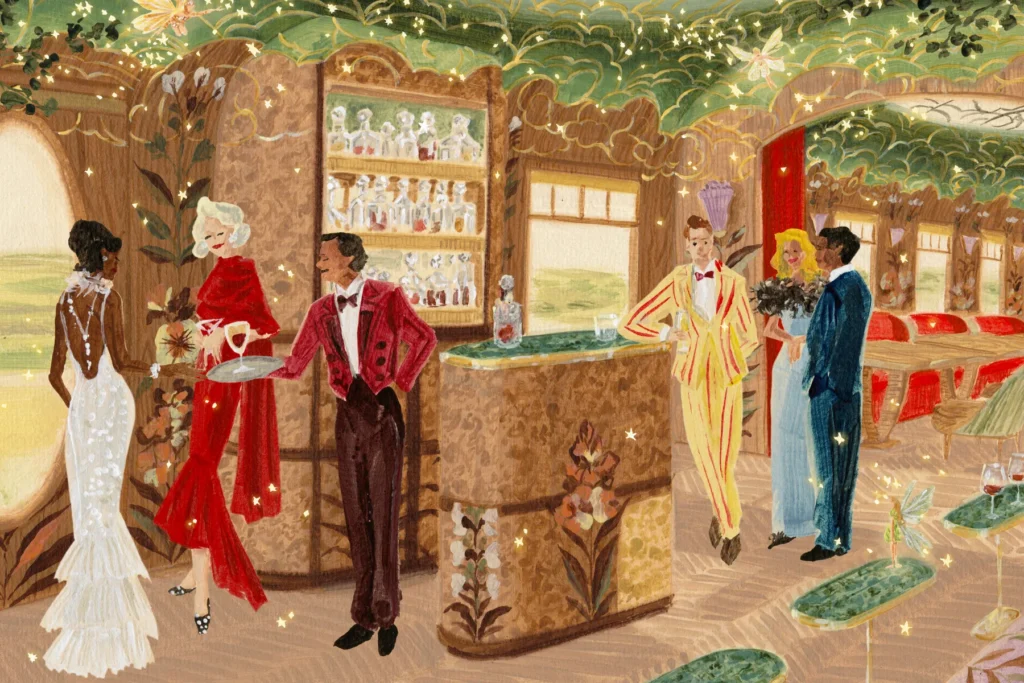
Both projects pose an interesting question about preservation. Should a historic carriage remain faithful to its last working incarnation, or can a new designer add a chapter to its biography?
On the British Pullman, there is room for both arguments.
The traditional carriages retain the quieter pleasures of wood, fabric and proportion. The newer interpretations introduce an element of playfulness, acknowledging that the romance of rail travel has always owed something to imagination.
What unites them is the physical experience of the carriage itself. These are rooms that move. Glasses tremble almost imperceptibly on the table. The sound of the rails enters through the floor. Daylight shifts across the upholstery as the train passes through open country.
No stationary dining room, however beautifully designed, can quite reproduce that combination.
And perhaps that is the most compelling design decision of all: the view remains the one element that no decorator can control.
A Dining Room in Motion
There is a particular pleasure in watching a beautifully laid table negotiate the gentle uncertainties of railway travel.
A wine glass trembles almost imperceptibly as the carriage crosses a set of points. Silverware catches the changing light. Beyond the window, a line of houses gives way to allotments, then open fields, while an attendant moves along the narrow aisle with the measured confidence of someone accustomed to serving lunch on a floor that refuses to remain entirely still.
Dining aboard the British Pullman is not simply an accompaniment to the journey. It is one of the principal reasons for making it.
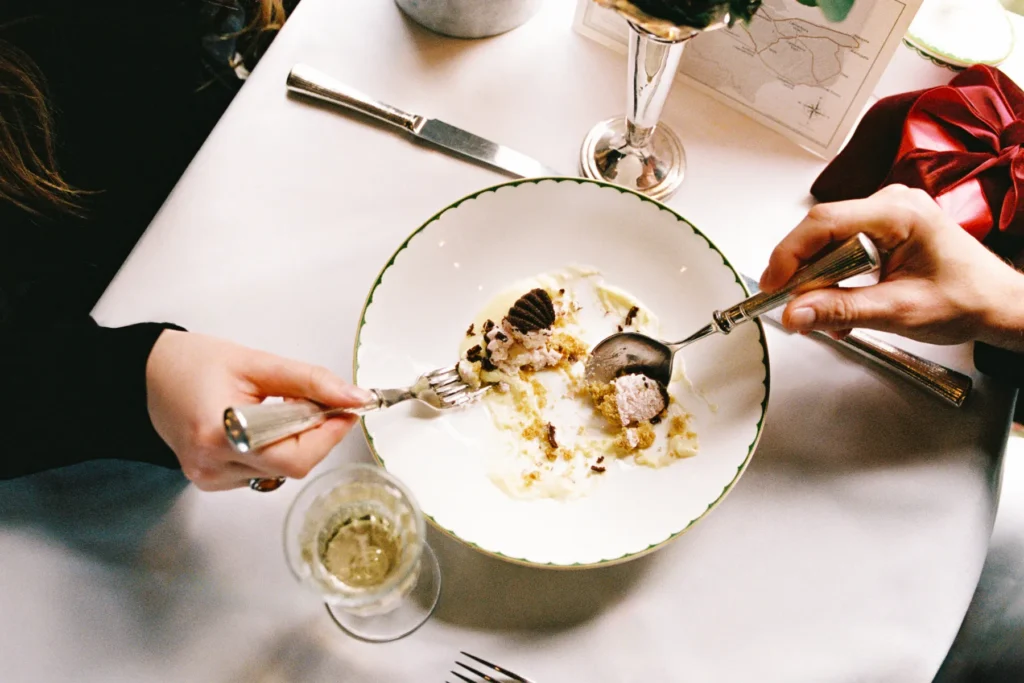
Depending on the excursion, the experience may involve an elaborate brunch, afternoon tea or a multi-course lunch or dinner, with Champagne and carefully selected wines. The menus draw upon modern British cooking and seasonal ingredients, favouring the pleasures of a properly composed meal over the novelty of eating aboard a train.
It is an important distinction. Railway food has spent much of its history struggling against the limitations of space, equipment and movement. Here, those limitations become part of the theatre.
The kitchens must function within a carriage’s narrow dimensions. Dishes must be prepared and presented while the landscape is passing at considerable speed. Service has to accommodate the unpredictable movements of the train, yet appear almost effortless to those seated at the tables.
The result is a form of hospitality that depends as much upon choreography as culinary ambition.
There is time to appreciate the details. The weight of a fork, the precise arrangement of a plate, the discreet replenishing of a glass. Courses arrive at a pace that allows conversation to wander and the view to interrupt whenever it chooses.
At one moment, the subject might be the intricacy of the wood panelling. At another, a church tower appearing above the trees. The countryside becomes an uninvited but welcome guest at lunch.
The British Pullman occasionally collaborates with distinguished chefs, producing special departures that place particular emphasis on gastronomy. Yet the essential appeal of its regular dining journeys is less dependent upon celebrity than consistency. A well-cooked meal, attentive service and a remarkable setting are persuasive enough.
There is, admittedly, something faintly extravagant about devoting an afternoon to lunch while travelling in a large circle. The British have traditionally been rather good at disguising extravagance as an exercise in good manners.
Here, however, there is little need for disguise.
The pleasure lies in allowing lunch to occupy the afternoon rather than fitting it between appointments. No one is watching the clock for the next meeting. Nobody needs the table back for another sitting in ninety minutes.
Outside, England continues to unfold.
And as the next course arrives, it seems entirely sensible to give the journey a little more time.
The England Beyond the Glass
England is not always at its most revealing when approached through its famous landmarks.
Sometimes it is better understood through the untidy edges of a field, the back of a village garden or the particular shade of green that settles over the countryside after a morning of rain.
From the British Pullman, such details acquire an unexpected importance.
On the Golden Age of Travel excursion through Kent, the journey gradually exchanges the dense fabric of London for the gentler landscape of the south-east. Suburban streets recede. Gardens grow larger. The railway passes through cuttings and woodland before opening onto farmland, scattered houses and the cultivated countryside for which the Garden of England has long been known.
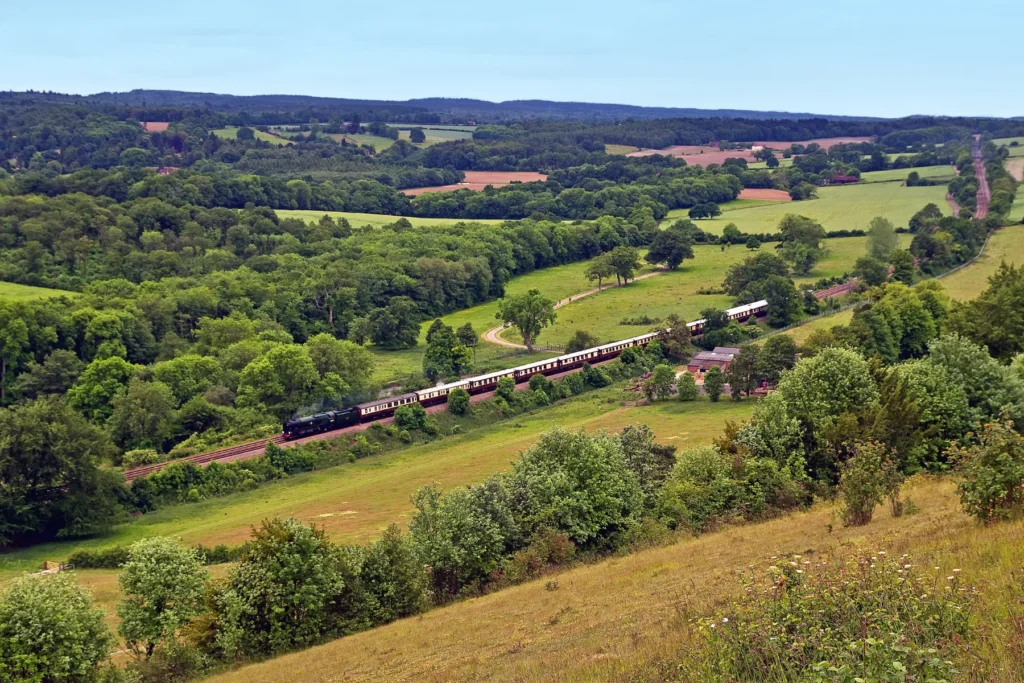
Kent possesses a quiet agricultural character that rewards patient observation. Orchards, hop-growing heritage and distinctive oast houses speak of older rural industries, while church towers and brick-built villages suggest a landscape shaped by centuries of settlement.
Not every one of these features will appear outside the carriage window on a particular departure. Railway routes and the seasons determine what can be seen. Yet the wider character of Kent remains unmistakable: a closely worked countryside where agriculture, village life and the railway have long existed alongside one another.
In spring, fresh leaves soften the hedgerows and the fields are newly green. Early summer brings longer light and the rich colour of growing crops. September has a different atmosphere, with deeper tones and the first suggestion of autumn in the trees. By December, bare branches expose the structures of villages and farm buildings that foliage conceals during the warmer months.
The landscape is not dramatic in the manner of the Scottish Highlands or the Swiss Alps. It does not need to be.
Its pleasures are intimate, found in the changing textures of woodland and pasture, the geometry of fields and the occasional glimpse of a country house beyond the trees.
The British Pullman’s wider programme offers other interpretations of England. Excursions to Bath introduce Georgian streets and honey-coloured stone; journeys to Oxford and York exchange rural tranquillity for university courts or medieval architecture. Coastal departures offer the possibility of sea air and a quite different sense of escape.
The distinction matters. A destination excursion combines the pleasures of the carriage with time spent exploring somewhere beyond it. A circular dining journey makes the railway itself the principal attraction.
Neither is inherently superior. They simply ask different things of the traveller.
For those accustomed to measuring a journey by the number of places visited, the circular excursion may initially seem an odd proposition. Several hours pass, an elaborate meal is served, and the train eventually returns to the station from which it departed.
Geographically, very little has been accomplished.
Yet that is precisely where the experience becomes interesting.
The landscape has changed continuously, and with it the character of the afternoon. One has watched the city loosen its grip, observed the countryside at leisure and allowed familiar scenery to become quietly absorbing.
There is no grand revelation waiting beyond the final bend.
Only the gradual recognition that travelling slowly, even through places one might otherwise overlook, can be an entirely worthwhile pursuit.
The Quiet Ceremony of Being Looked After
There is a particular skill involved in making elaborate hospitality appear uncomplicated.
On the British Pullman, much of the experience depends upon the people moving through its narrow corridors, balancing trays, attending to glasses and anticipating the small requirements of passengers who have surrendered their afternoon to the pleasures of being looked after.
It is a form of service with deep roots in railway history.
The original Pullman Company built its reputation not merely upon comfortable carriages, but upon the idea that travelling by train could resemble a visit to a particularly well-run hotel. The attendants were central to that proposition. Meals were served at proper tables, passengers were addressed with courtesy, and the ordinary inconveniences of travel were kept discreetly out of sight.
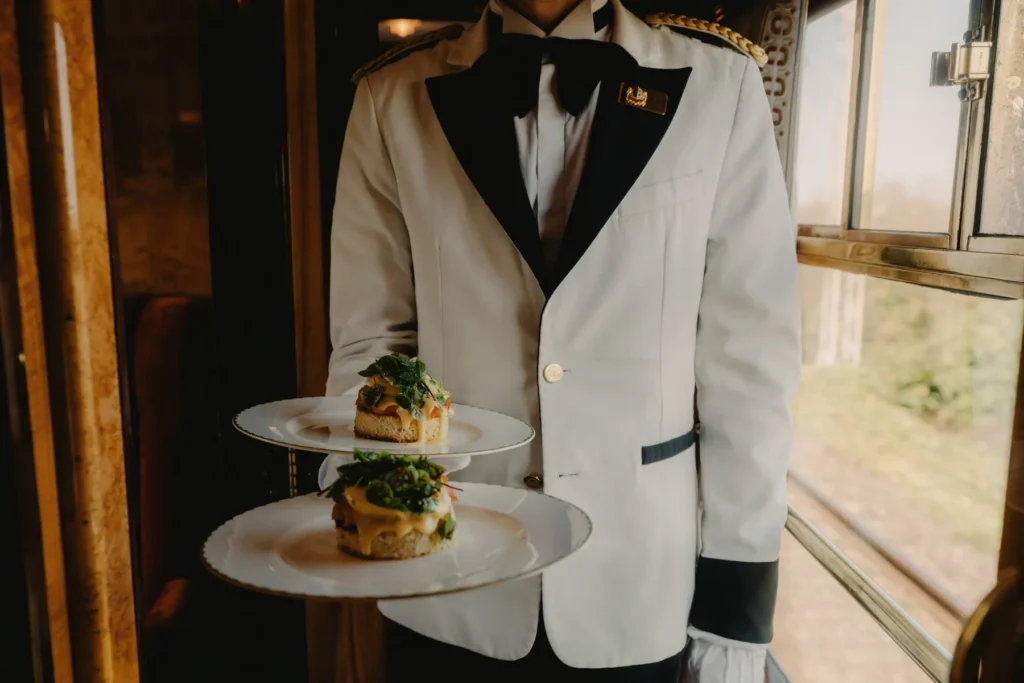
The British Pullman preserves something of that tradition, though its interpretation is necessarily contemporary.
There is ceremony, certainly. Tables are prepared with care, drinks presented with a measured flourish and courses served in a sequence that gives the afternoon its structure. Yet the most effective hospitality is rarely the most conspicuous.
It is the quiet recognition that a passenger would prefer another glass of water. The willingness to explain an unfamiliar detail of the carriage. The ability to let a conversation continue uninterrupted while making certain that nothing has been overlooked.
These gestures may sound modest. In practice, they require considerable judgement.
A railway dining carriage is an unusually intimate environment. Passengers remain in relatively close quarters for several hours, sharing the same changing scenery, the occasional sway of the train and the soft domestic sounds of a meal in progress.
An attendant cannot simply disappear into a distant restaurant kitchen. Service takes place in full view, against a background that is perpetually moving.
There is also the question of atmosphere.
Some passengers have come to mark an anniversary or birthday. Others are railway enthusiasts, interested as much in the history of the carriages as in the menu. A few may simply have decided that lunch on a train is a rather agreeable way to spend a day.
The challenge is to make the occasion feel special without insisting that everybody experience it in precisely the same way.
This is where the British Pullman is at its most convincing: not in the polished brass or the elaborate place settings, but in the possibility of allowing guests to relax into their surroundings.
For all the historical grandeur, the finest moment may be an entirely ordinary one.
A cup of coffee arrives. The conversation resumes. Beyond the window, the landscape slips quietly past.
And for a little while, there is nothing whatsoever that requires attention.
The Pleasure of Arriving Where You Began
Eventually, the countryside begins to give way to London.
Fields become playing grounds, railway sidings and rows of terraced houses. The train passes through the familiar infrastructure of the capital, where tracks converge and buildings gather more closely around the railway.
The change is gradual, but unmistakable.
Inside the British Pullman, the afternoon has acquired the comfortable disorder that follows a good meal. Glasses stand beside empty coffee cups. Conversations have become quieter. Passengers turn towards the windows as the train approaches the city, recognising landmarks that might have passed unnoticed earlier in the day.
Soon enough, Victoria appears.
There is something gently absurd about returning to precisely the station from which one departed several hours before, particularly when the journey has involved considerable expense, an elaborate meal and the services of an entire train crew.
By conventional measures, very little has been achieved.
No significant distance has been conquered. No overnight destination has been reached. The luggage, if there was any, has scarcely travelled far enough to justify packing it.
And yet the afternoon has been spent somewhere genuinely removed from ordinary life.
Part of the attraction lies in the carriages themselves. Their polished timber, considered proportions and carefully restored fittings offer an unusually tangible connection to Britain’s railway heritage. Unlike a museum exhibit, however, they continue to perform the work for which they were designed. They carry passengers, provide a setting for conversation and move through the countryside on working railway lines.
There is value in that continuity.
The British Pullman is not without its compromises. The price places it firmly in the category of an occasional indulgence. The experience is more formal than some travellers will enjoy, and anyone seeking the solitude of a private cabin or the romance of waking in another country should look elsewhere.
Nor is this slow travel in the practical, environmental sense of replacing a flight with a long-distance railway journey. Its purpose is recreational. It offers a different understanding of slowness: an afternoon deliberately left unhurried.
That distinction deserves to be acknowledged rather than obscured.
For the right traveller, however, the appeal is considerable. The British Pullman combines fine dining, historical craftsmanship and a succession of changing views without demanding the organisational effort of a longer holiday.
One arrives at the station, steps aboard and allows the afternoon to proceed according to a rhythm established long before the present age of hurried departures and crowded concourses.
As the train settles beneath Victoria’s roof, the carriage returns to stillness. The almost imperceptible movement beneath the tables disappears. Beyond the windows, the station resumes its ordinary business.
Soon the passengers will step onto the platform, retrieve their coats and rejoin London, where trains are still measured principally by whether they arrive on time.
The British Pullman has a different measure of success.
It has taken its passengers out into the English countryside, fed them rather well and returned them to where they began.
For an afternoon, that has been quite enough.
Pre-departure stay
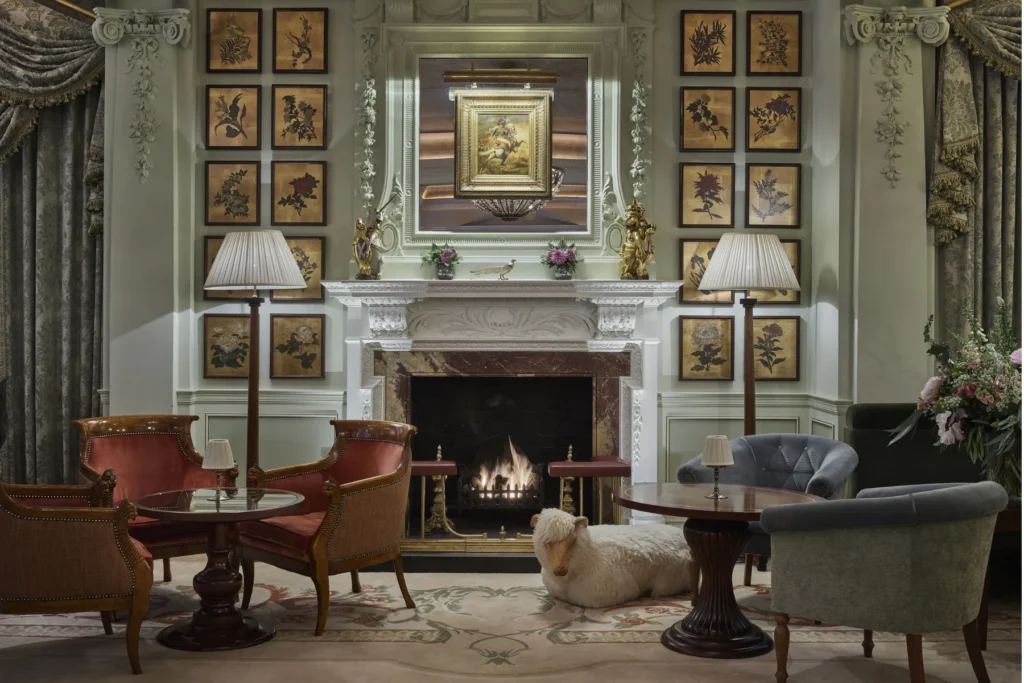
The Goring
Opened in 1910 and still family-owned, The Goring offers Edwardian elegance, immaculate service and a secluded garden behind its discreet Belgravia façade. Just minutes from Victoria station, it is a fitting introduction to the measured pleasures of Britain’s grand railway tradition.
Hotel 41
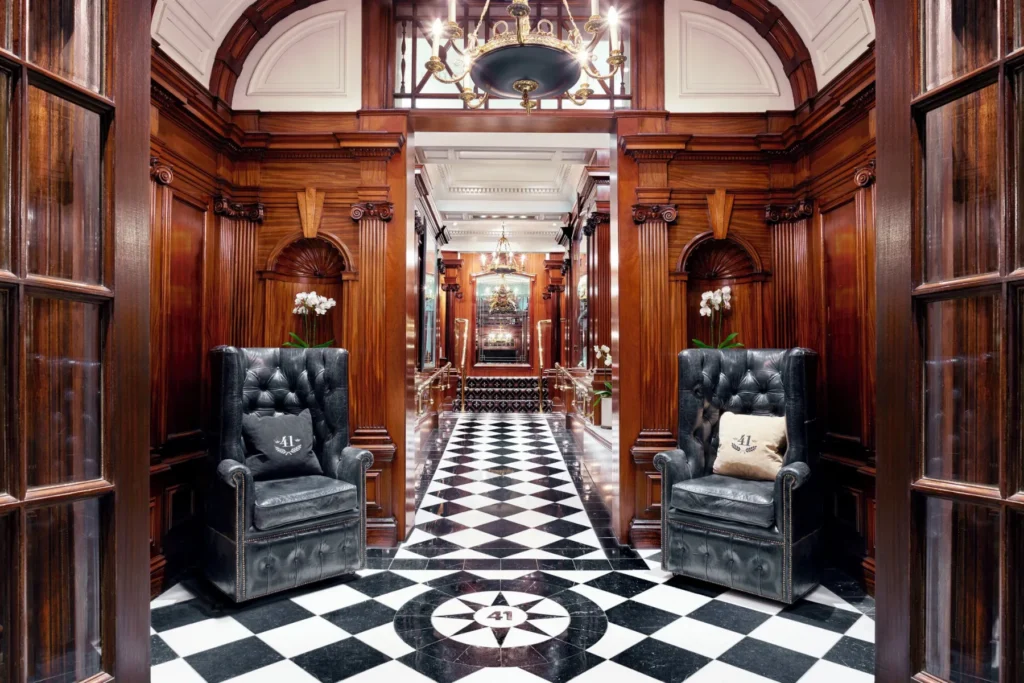
Occupying a former ballroom above the historic Rubens at the Palace, Hotel 41 has the quiet confidence of a private members’ club. Monochrome interiors, attentive hospitality and an intimate atmosphere provide a particularly civilised overnight stop before boarding at Victoria.
More Journeys with Belmond
The British Pullman’s beautifully restored carriages offer a glimpse of railway travel at its most gracious. Elsewhere in Belmond’s collection, that same appreciation for craftsmanship, fine dining and unhurried exploration extends to overnight journeys through Britain and across Europe, where the landscapes become part of a longer story.
Britannic Explorer — A New Way of Seeing Britain
Departing from London Victoria, the Britannic Explorer exchanges the Pullman’s Edwardian elegance for contemporary British design. Private suites, seasonal cuisine and journeys through Cornwall, Wales and the Lake District invite a more leisurely acquaintance with Britain’s landscapes.
Discover the Britannic Explorer
Venice Simplon-Orient-Express — The Long Way to Paris
From Venice’s lagoon to the boulevards of Paris, the Venice Simplon-Orient-Express preserves the romance of continental railway travel. Historic carriages, intricate marquetry, Lalique glass and candlelit dining provide an atmospheric setting for a night spent crossing Europe.
Explore the Venice Simplon-Orient-Express
Belmond Royal Scotsman — Scotland at the Speed of Looking
Beyond Edinburgh, the Royal Scotsman travels through a landscape of Highland glens, historic castles and quiet railway stations. With intimate sleeping cabins, Scottish gastronomy and an observation carriage made for watching the countryside, the journey rewards those in no particular hurry.